

If you’re searching sell my car California, you’re probably weighing three options: post it yourself and deal with strangers, drag it to a dealership and get lowballed on trade-in, or find something faster that doesn’t eat your weekend. Each path has different paperwork, different payment timelines, and different amounts of hassle, and picking wrong can cost you money or a few stressful weeks.
This guide walks you through exactly what California requires to sell a car legally, from the release of liability you file with the DMV to the smog check rules and title transfer steps that trip up first-time sellers. You’ll also get a straight comparison of private sale vs online car selling and dealership trade-ins, so you know which route actually fits your timeline and how much work you’re willing to do.
We’ll cover how to price your car accurately, what documents to have ready before a buyer even shows up, and how remote appraisal services like ours let you skip dealership visits entirely, get an instant offer after a short video call, and get paid the same day your car gets picked up. By the end, you’ll know exactly which selling method makes sense for your situation.
What you need to know before selling your car in California
California treats car sales like a legal transaction, not a handshake deal, so a few rules apply no matter who you sell to. Missing paperwork to sell a car in California is the number one reason private sales fall apart or leave the seller on the hook for something that happens after the car changes hands. Before you list your car anywhere, get familiar with what the state actually requires.
The title and Release of Liability
You need the California Certificate of Title signed over to the buyer, with the odometer reading and sale price filled in correctly. Just as important: file a Notice of Release of Liability (REG 138) with the California DMV within 5 days of the sale. This form tells the state you no longer own the vehicle, so any parking tickets, toll violations, or accidents the new owner causes don’t come back to you.
Skipping the Release of Liability can leave you legally tied to a car you no longer own.
You can file it online through the DMV’s website or mail a paper copy. Keep a dated confirmation for your own records, since buyers sometimes delay registering the vehicle in their name.
Smog check requirements
Most California sellers need a valid smog check before selling a car, dated less than 90 days before the sale. There are exceptions worth knowing:
- Vehicles less than 4 years old (registered with a Certificate of Compliance) are typically exempt
- Electric vehicles don’t require a smog check
- Selling directly to a licensed dealer usually shifts the smog check responsibility to them
This last point matters if your car is older or has a check-engine light on. Selling to a dealership or an online buyer often means you avoid the repair costs some smog stations demand before they’ll pass a car.
Payoff amounts and lienholders
If you’re still financing the vehicle, call your lender for a current payoff quote, not just your monthly statement balance. Private buyers rarely want to navigate a lienholder payoff, and it adds real delay to closing the deal. Dealerships and online buyers handle this routinely, wiring the payoff directly to your lender and giving you the difference.
Sales tax and bill of sale
Quick reference for what’s typically required, depending on how you sell:
| Requirement | Private Sale | Dealer Trade-In | Online Instant Offer |
|---|---|---|---|
| Signed title | Required | Required | Required |
| Smog certification | Usually required | Handled by dealer | Handled by buyer |
| Release of Liability | You file it | Dealer often files it | Buyer’s team files it |
| Bill of sale | Recommended | Provided by dealer | Provided by service |
| Payment timing | Varies, risk of bad checks | Immediate, at signing | Same-day wire |
Zooming out, none of this is complicated once you know the checklist, but it’s exactly where private sellers lose time and where scams tend to happen. Understanding these requirements upfront means whichever selling method you pick in the next section, you won’t get blindsided by a form you didn’t know you needed or a smog repair bill that eats your profit.
Step 1. Choose how you want to sell your car
Three paths get your car sold in California, and each one trades speed for effort in a different way. Private party sales typically net the highest sale price on paper, but you’re the one fielding calls, hosting test drives with strangers, and hoping the cashier’s check doesn’t bounce. Dealership trade-ins are fast and low-effort, but the offer usually reflects wholesale pricing, not what your car is actually worth on the open market. Online instant offer services, like ours at Car Trackers, sit in between: you get a real appraisal and a competitive number without listing your car publicly or driving anywhere.
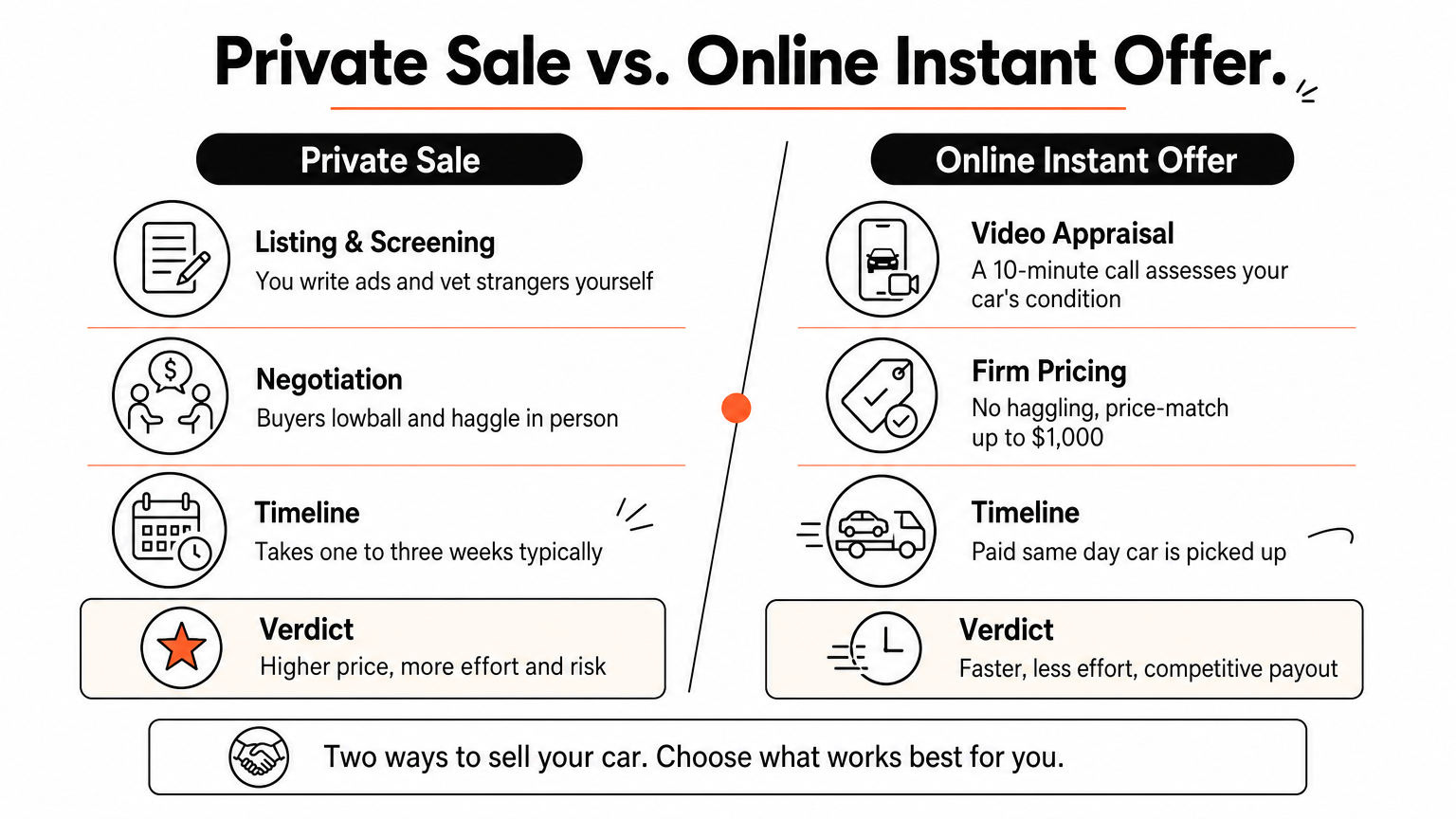
Private sale
Going private means writing your own listing, screening buyers, negotiating price, and handling the paperwork solo, so it helps to follow a step-by-step guide to selling your car privately. Expect to spend several hours over one to three weeks, plus the risk of no-shows and lowball offers from people who never intended to pay asking price.
Dealership trade-in
Trading in at a dealership takes an afternoon. You drive in, they inspect the car, and you walk out with a number, usually tied to a new vehicle purchase. The tradeoff: dealer offers run lower because they need margin to resell your car at a profit, which is the core of the trade-in vs selling your car online decision.
Online instant offer
Services built around a remote video appraisal let you skip the lot entirely. You submit your vehicle details online, hop on a 10-minute video appraisal so an appraiser can see the car’s actual condition, and get a firm offer immediately after. No haggling, no strangers coming to your driveway to "just look."
The fastest path to selling your car in California is usually the one that doesn’t require you to leave your house.
Online offers also come with a practical edge: our price-match guarantee beats competing dealer offers by up to $1,000, so you’re not leaving money on the table just to save time. Yourself deciding which route fits depends on how much your time is worth versus how much extra negotiating you’re willing to do. If you want speed, transparency, and same-day payment without dealership visits, get an instant offer from Car Trackers before you commit to listing your car anywhere else.
Step 2. Get an accurate value and offer for your car
Pricing your car correctly is where most sellers either leave money on the table or scare off every serious buyer. Guessing at a number based on what your neighbor sold his truck for last year won’t cut it in a market where mileage, trim, and condition swing value by thousands of dollars. Before you accept any offer, whether it’s from a private buyer, a dealership, or an online service, you need a real baseline to compare it against.
Check multiple valuation sources
Start with at least two or three online valuation tools to determine your car’s value and set the right selling price, so you’re not anchored to a single number. Kelley Blue Book and Edmunds both let you enter your VIN, mileage, and condition to get a price range, and cross-referencing them tells you if one is skewing high or low for your specific car.
- Pull a KBB estimate for private-party value and trade-in value separately
- Check Edmunds for a second opinion on the same car
- Search recent sold listings (not just active ones) for your exact year, make, and model in your area
- Factor in any mechanical issues, accident history, or missing service records
A car is only worth what someone will actually pay for it today, not what an online tool guessed six months ago.
Compare real offers, not just estimates
Once you have a ballpark, get actual offers to see how they stack up. Dealership trade-in quotes come in low because they need resale margin, which is worth understanding when you see how dealerships calculate car value. Private buyers will lowball you first and negotiate up, if they show at all. An instant offer from a service like Car Trackers gives you a firm number based on a real video appraisal of your specific car’s condition, not a generic average.
Getting more than one offer is the single fastest way to know if you’re leaving money behind. If a dealer quotes you $8,500, run that same car through Car Trackers’ free appraisal and see where it lands, our price-match guarantee means we’ll beat a documented competing offer by up to $1,000, so comparing costs you nothing but ten minutes on a video call.
Step 3. Gather your title, smog check, and other paperwork
Before anyone hands you a check or wires you money, you need every document in order, because a missing signature can stall a sale for weeks. Paperwork gaps are the single biggest reason private sales fall through at the last minute, when a buyer is ready to pay but the title doesn’t match the name on your registration. Get organized before you list the car or book an appraisal, not after someone’s already interested.
Pull your title and registration
Locate your California Certificate of Title first. If it’s lost, request a duplicate through the DMV before you go any further, since selling a car without a title is rarely straightforward and no legitimate sale closes without it. Grab your current registration card too, since buyers and dealers will want to confirm the VIN matches across both documents.
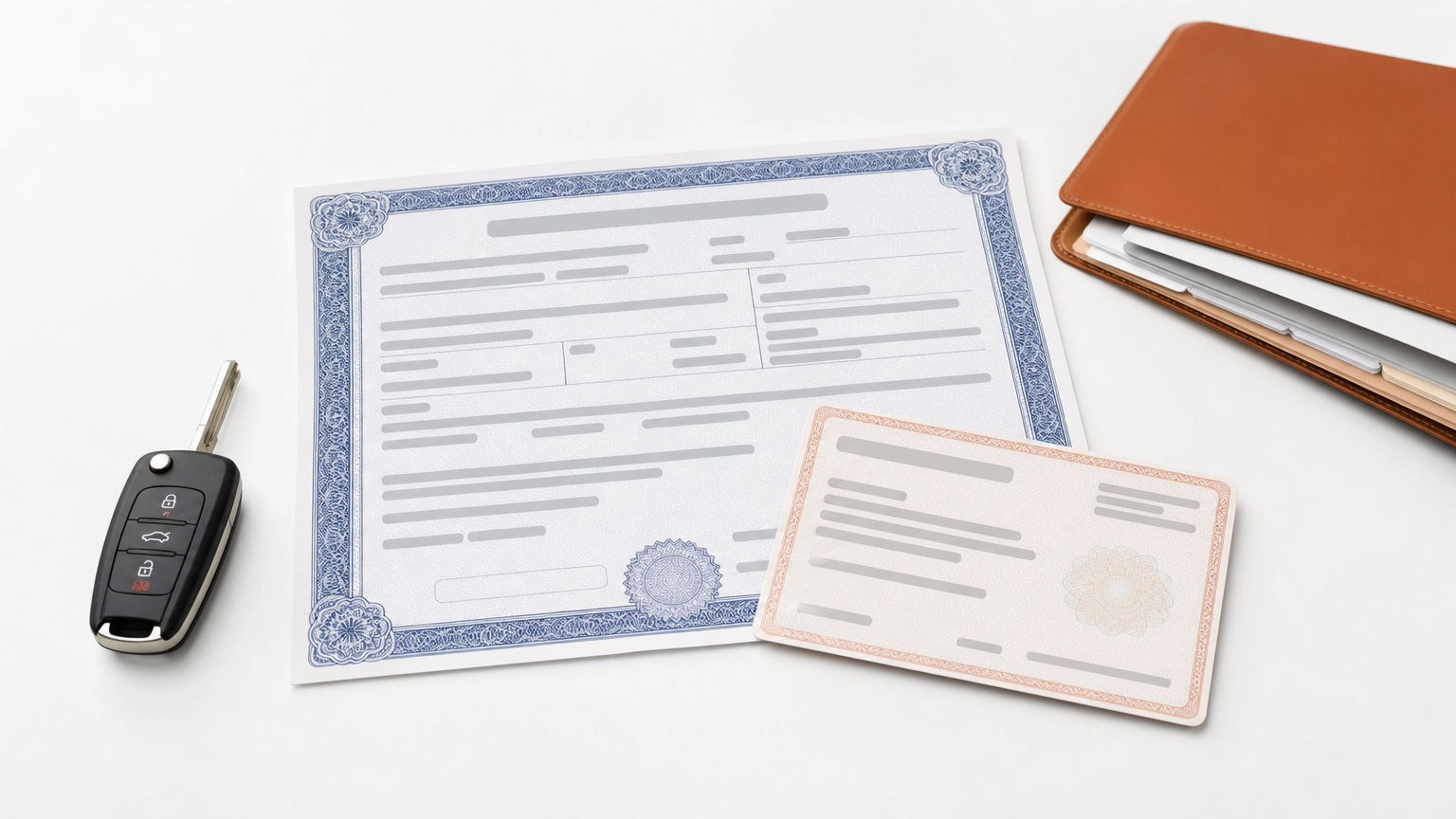
No title, no sale, no matter how motivated the buyer is.
Get your smog certification sorted
Unless your car qualifies for an exemption, schedule a smog check at a licensed Test-Only or Smog Check station and get it done within 90 days of the sale date. Fix any obvious issues first, a check-engine light almost guarantees a failed test and an unplanned repair bill right before closing.
Round up the extras
Here’s the full list of documents required to sell a car in California to have ready before a buyer, dealer, or appraiser shows up:
- Signed Certificate of Title with odometer reading and sale price filled in
- Current registration card
- Valid smog certification (unless exempt)
- Payoff quote from your lender, if there’s a loan on the car
- Maintenance and repair records
- Spare keys and any owner’s manuals
- A completed bill of sale for your own records
Gathering all of this upfront saves you from scrambling once someone’s ready to buy, and it signals to a buyer or appraiser that you actually take care of your vehicle. If you’re going the online instant offer route, services like Car Trackers streamline this even further: our licensed appraisers handle the purchase agreement and title transfer paperwork directly, so you’re not stuck decoding DMV forms on your own kitchen table.
Step 4. Complete the sale and transfer the title
Once a buyer agrees to your price, whether that’s a private buyer, a dealer, or Car Trackers after your video appraisal, the actual transaction needs to follow California’s rules exactly, or you risk liability down the road. Signing the paperwork correctly matters more than any other step in this guide, because a sloppy title transfer is what turns a smooth sale into a phone call from the DMV six months later.
Sign the title and collect payment
To transfer car ownership properly, fill out the Certificate of Title with the buyer’s name, the sale date, the odometer reading, and the final sale price, then have both parties sign it. Never hand over the keys before payment clears. Cashier’s checks can be forged, so if you’re doing a private sale, learn how to take a safe cash payment when selling a car: meet at the buyer’s bank to verify funds in person, or insist on a wire transfer you can confirm before releasing the car.
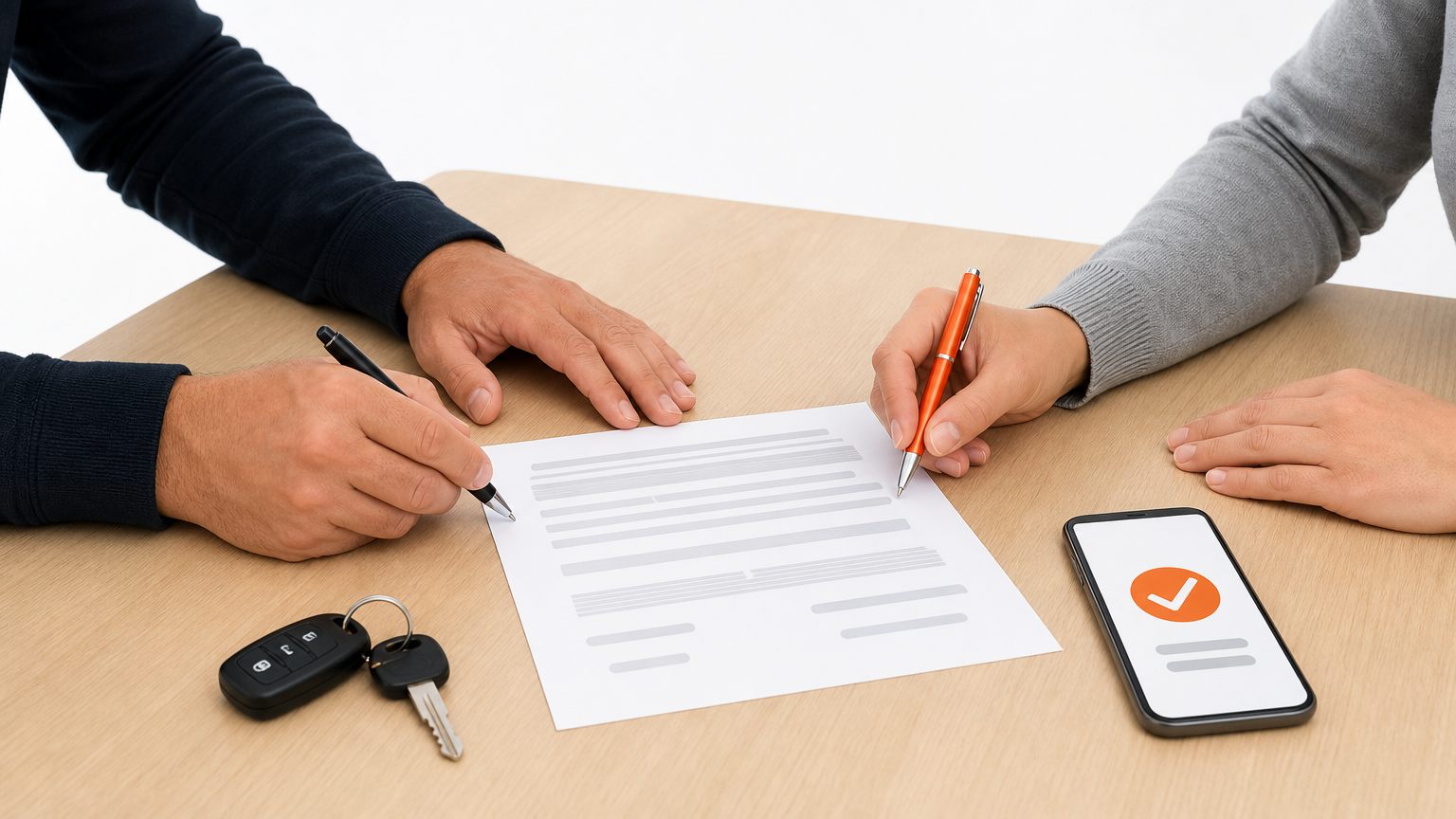
Never release the car until the money is confirmed in your account, not just promised.
This is exactly where online instant offer services simplify things. With Car Trackers, payment goes out by same-day wire the moment the car is picked up, so there’s no waiting on a check to clear or wondering if funds are legitimate.
File the Release of Liability
Within 5 days of the sale, submit your Notice of Release of Liability (REG 138) to the DMV, either online or by mail. Don’t skip this step just because the buyer says they’ll handle registration. Filing it yourself protects you regardless of what the new owner does next.
Hand over the paperwork
Give the buyer the signed title, the bill of sale, the smog certificate, and any maintenance records you gathered in Step 3. Keep copies of everything for your own files, including the REG 138 confirmation.
Completing these steps closes out your responsibility for the vehicle cleanly. If you’d rather skip the DMV forms and payment verification entirely, Car Trackers’ licensed appraisers handle the purchase agreement and title transfer for you, so the only thing you need to do is show up when they pick up the car.
Final steps for a smooth sale
Selling a car in California comes down to four things: pick your selling method, price it honestly, gather your paperwork, and close the deal with the title signed correctly. Skip any one of those and you risk a stalled sale, a lowball offer, or a liability headache months after the car’s gone. The private sale route can net you more, but only if you have the time and patience to screen buyers and chase payment. Dealership trade-ins are fast but rarely pay what your car is worth.
Ultimately, if you want the speed of a dealership without the wholesale price cut, an online instant offer splits the difference and gets you paid the same day. You’ve now got the full checklist, the paperwork, and the comparison to make that call with confidence. When you’re ready to skip the DMV lines and dealership visits altogether, get an instant offer for your car from Car Trackers and get paid the day your car gets picked up.
