

If you want to sell my car for cash California style, you probably want three things: a real buyer, a fair number, and no weeks of texting strangers. Dealership lots, classified ads, and lowball tow-yard quotes all eat time. Most of that hassle is avoidable.
Here is the short answer. In California, you can sell a car for cash from home, without visiting a dealer, in about one day. You submit your vehicle details online, show the car on a short smartphone video call, and get a final offer. Then a buyer picks up the car and you get paid. Running or not, the process works the same way.
This guide walks you through each step at Car Trackers, where we buy cars remotely across California. You will see how pickup is scheduled, how same-day wire payment works, and which California paperwork you need, including the title, the release of liability, and the smog considerations. You will also learn how to avoid common cash-sale mistakes.
Your options for selling a car for cash in California
California gives you four realistic ways to turn a car into cash. They differ in speed, price, and effort, so the right pick depends on what your car is worth and how soon you need the money.
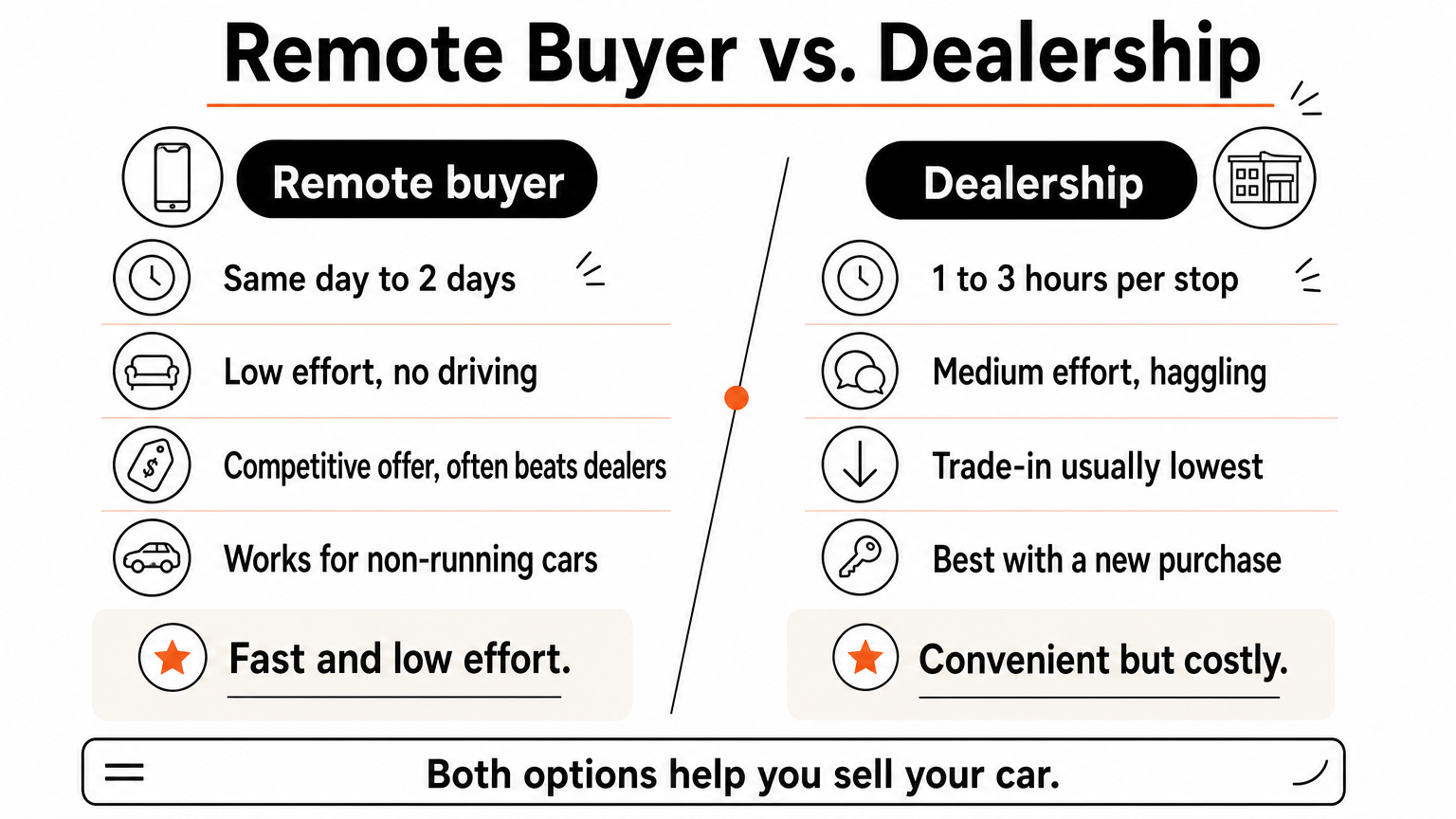
Side-by-side comparison
Use this table to match each route to your situation. Time and effort matter most when your car is old, damaged, or not running.
| Option | Typical speed | Price | Your effort | Best for |
|---|---|---|---|---|
| Remote buyer (video appraisal) | Same day to 2 days | Competitive, often beats dealers | Low | Running or non-running cars |
| Dealership | 1 to 3 hours per stop | Trade-in is usually lowest | Medium | Buying another car at the same lot |
| Private sale | 1 to 4 weeks | Highest on paper | High | Popular late-model cars |
| Junk or scrap yard | 1 to 3 days | Scrap value only | Low | Wrecked or very old cars |
Remote buyers
Remote buyers like Car Trackers skip the lot entirely. You submit your vehicle details online, show the car on a 10-minute video call, and get a final offer on the spot. A same-day wire follows pickup, and the appraisal costs nothing.
A video appraisal gets you a real, final offer without driving to a single lot.
Low overhead lets remote buyers beat most dealer numbers. Car Trackers adds a price-match guarantee, paying up to $1,000 more than a competing dealer offer. Cars that run and cars that don’t start go through the same process.
Dealerships and private buyers
Dealerships are quick if you are buying another car, but you pay for that convenience. Trade-in values sit below retail, and every quote costs you an hour of driving and haggling.
Private sales can net the most money, but you carry all the work. You handle the ads, the test drives, and payment fraud risk, since fake cashier’s checks and payment-app scams are common. You must also file a release of liability with the DMV within five days of the sale.
Junk yards and tow services
Scrap yards will take almost anything, but they pay by weight, which often means a few hundred dollars. If your non-running car has a clean title and a sound body, a buyer who appraises condition instead of weight will usually pay more. Get at least one of those offers before you accept a tow-yard quote.
Step 1. Gather your vehicle details and documents
Prep takes about 15 minutes and prevents most delays. When you sell your car for cash in California, the usual holdup is a missing title or an unknown loan balance, not the car itself.
Documents to have ready
Start with paperwork, because it decides how fast the title transfer goes and when your money arrives. Gather these items before you request an offer:
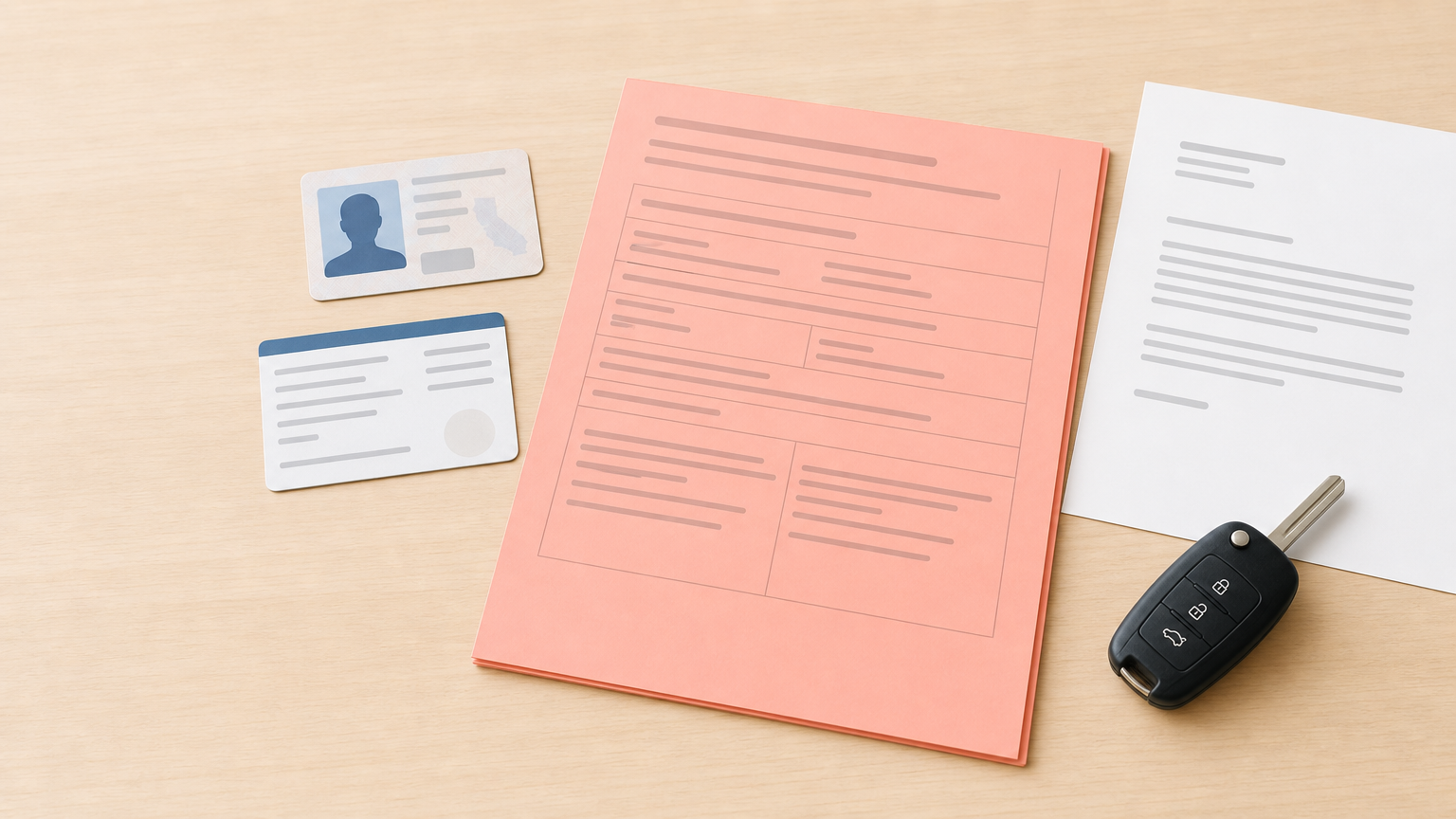
- California certificate of title (the pink slip). Don’t sign it yet.
- Current registration, so the buyer can match names and plates.
- Valid driver’s license that matches the name on the title.
- Loan details if you owe money: lender name, account number, and a payoff amount from your lender.
- Recent smog certificate, if you have one. Ask your buyer whether it is needed for your sale.
If you can’t find the title, request a duplicate from the DMV using form REG 227 now. It is the one item you can’t work around.
Your title and your payoff number decide how fast you get paid.
Owing money is fine. The buyer pays your lender first and sends you the difference, but they need an accurate payoff figure to quote you honestly.
Vehicle details for your offer
Next, collect the facts an appraiser will ask for: year, make, model, trim, and current mileage. Find the VIN on the driver-side dashboard near the windshield or on the door jamb sticker. Photograph both so you can copy the number without typos.
Finally, get ready for the 10-minute video call. Charge your phone, park in daylight, and walk the car slowly. Show the odometer, the dashboard with the engine on (or off, if it won’t start), all four tires, and any dents or rust. Be upfront about warning lights and mechanical problems. Your offer is based on what the appraiser sees, so an honest walkaround keeps the final number from changing at pickup.
Step 2. Get offers and compare buyers
Request three offers in one afternoon
Aim for three offers from different types of buyers: one remote buyer, one dealer, and one junk or private estimate. You can collect all three in a single afternoon. When you sell your car for cash in California, competing numbers are the only way to know whether an offer is fair. Submit your details to each buyer using the VIN, mileage, and condition notes from Step 1, so every quote is based on the same facts.
Questions to ask every buyer
Price alone doesn’t tell you what you will actually receive. Put these questions to each buyer before you accept anything:
- Is the offer final after the video appraisal, or can it change at pickup?
- How and when is payment sent: wire, cashier’s check, or something else?
- Who pays off my lender, and how fast?
- Are there fees for towing, pickup, or paperwork?
- How long does the offer stay valid?
A buyer who answers these clearly in writing is usually one you can trust.
Compare the real payout, not the headline number
Some buyers advertise a high figure, then subtract fees or knock the price down when the truck arrives. Add up what lands in your account after every deduction, and note when it lands. A slightly lower offer with a same-day wire often beats a higher one that takes a week and carries a pickup charge.
The best offer is the one that is final, fee-free, and paid the day your car leaves.
Once you have a competing dealer quote, send it to us. Car Trackers has a price-match guarantee and will beat a competing dealer offer by up to $1,000. There is no cost or obligation to get an appraisal, so you lose nothing by asking.
Finally, pick your buyer and lock in the offer in writing by email or text. That message becomes your reference if anything changes later, and it sets up the paperwork in Step 3.
Step 3. Complete the paperwork and title transfer
When you sell a car for cash in California, the paperwork is short, but one wrong signature can delay your payout. Our licensed appraisers prepare the purchase agreement and handle the title transfer, yet you still sign a few things. Sign only after the buyer confirms the final offer in writing, and fill in the title in this order:
- Registered owner signature on the title, exactly as the name is printed. If two owners are joined by "and," both must sign.
- Odometer reading, with no tenths and no corrections.
- Sale date and sale price, matching the purchase agreement.
- Buyer’s name and address, copied from the agreement.
Avoid blank lines and lien surprises
Never hand over a title with the buyer line empty. An open title lets anyone claim the car, and you stay liable for tickets and tolls it racks up. Use black or blue ink and don’t cross anything out. A smudged title can mean a duplicate application and a delayed payment.
If you still owe money, your lender holds the title or a lien on it. Your buyer requests the payoff, pays the lender, and sends you the remaining balance. Give the buyer your lender’s contact details and payoff figure from Step 1 so nothing stalls.
Release of liability and smog
File a release of liability with the DMV within five days of the sale. You can do it online in a few minutes using the plate number, VIN, and the buyer’s details. Skipping it is the most common California seller mistake, and it can leave you responsible for the buyer’s parking tickets and accidents.
Sign the title once, correctly, then file your release of liability within five days.
Smog rules trip people up too. California sellers generally must provide a current smog certificate, but sales to licensed dealers are typically exempt, and so are some newer and electric vehicles. Ask your buyer in writing whether you need one before you spend money on a test. Then keep copies of the signed title, purchase agreement, and release confirmation.
Step 4. Schedule pickup and get paid
Once the paperwork is set, the last step is the shortest. Pickup happens where the car sits, whether that is your driveway, your workplace, or another spot you choose. The money follows the same day.
Book a pickup window
Choose a time that fits your schedule. Car Trackers arranges pickup at your convenience, and a car that won’t start goes through the same process as one that drives. Confirm the address, the time window, and any gate or parking details by text so the driver arrives prepared.
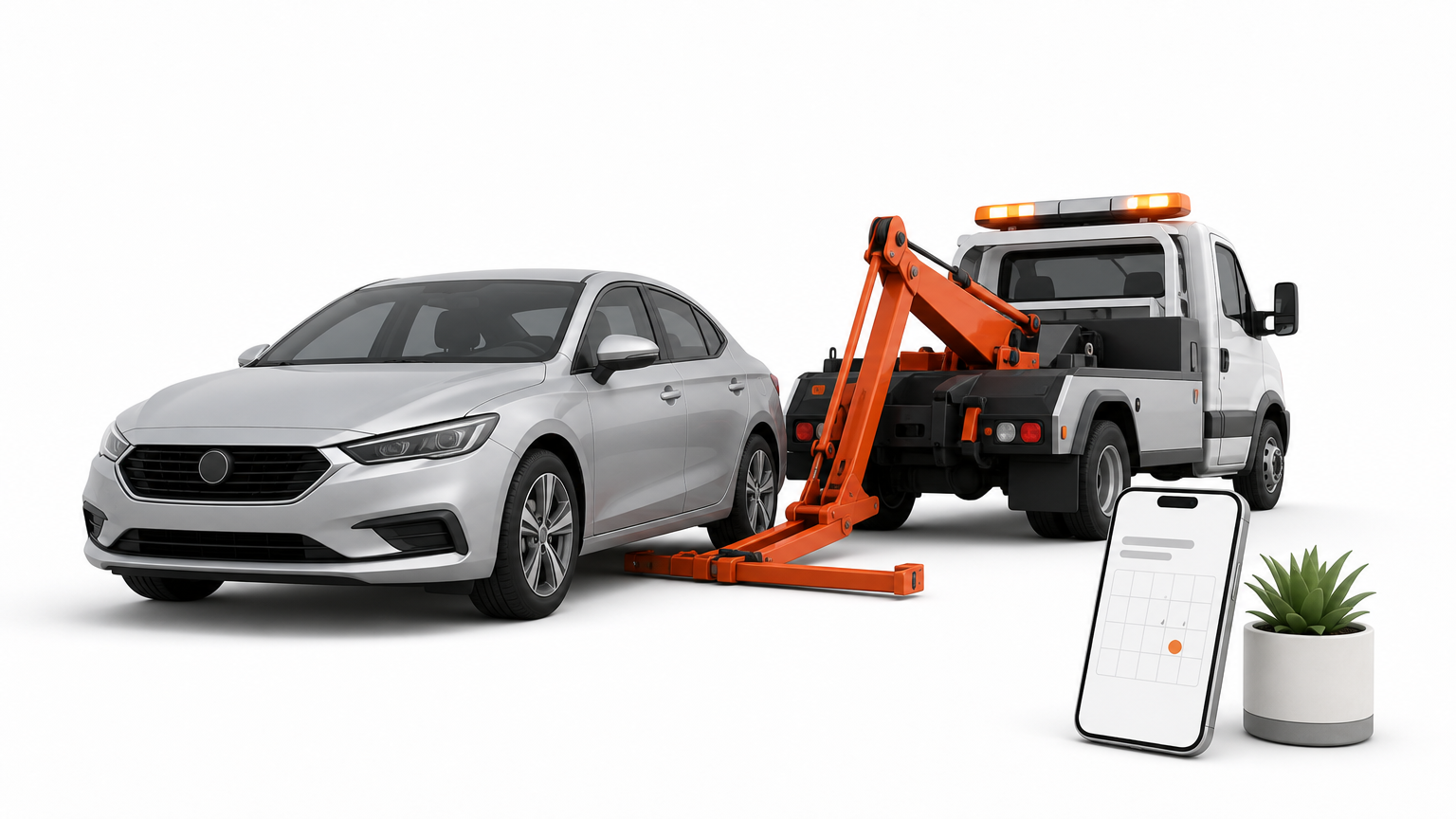
Before the driver shows up, run through this list:
- Remove personal items, toll transponders, and garage remotes.
- Keep the signed title handy, or your lender’s details if you still owe money.
- Leave the spare key and owner’s manual with the car.
- Have your driver’s license ready, with a name that matches the title.
Get paid the same day
Payment arrives by same-day wire once the car is picked up. Wires are hard to reverse, so double-check your account and routing numbers before you send them, and use only the purchase agreement or a channel you started yourself. Your bank decides when funds appear, so check your balance before you call the sale done.
Match the wire to your written offer before you consider the sale finished.
If you have a loan, the lender is paid first and you receive the difference. That is why the payoff figure from Step 1 matters. A wire for less than you expected usually means the payoff changed, so ask for the breakdown right away.
Wrap up after the car leaves
Take a few photos of the car at handoff, showing the odometer and the overall condition. File your release of liability if you haven’t already, and cancel your insurance only after the DMV confirms it. Cancel too early and you risk a coverage gap on a car you still own on paper.
That is the whole path if you want to sell my car for cash California style: online details, a video call, a signed title, and a wire. Keep your copies of the agreement, the release confirmation, and the payment record for at least a year.
Ready to turn your car into cash
Selling a car for cash in California comes down to four moves. Gather your title, loan details, and VIN, compare a few offers, sign the paperwork correctly, and schedule pickup. Do those in order and the sale is done in about a day, whether the car runs or not.
The details that protect you are small. Get the offer final and in writing, never hand over a title with a blank buyer line, and file your release of liability with the DMV within five days. Check that the wire matches your agreement before you call the sale finished.
You don’t need to drive to a single lot or negotiate with strangers. If you want a straight answer today, get your free instant offer from Car Trackers. The appraisal costs nothing and takes a 10-minute video call. The price-match guarantee lets you test it against any dealer quote, with no obligation.
