

The best used car sell website depends on what you value more: the highest price or a fast, low-effort sale. Private-sale marketplaces like Autotrader, Cars.com, CarGurus, and Craigslist can bring the best price, but you do the work. Instant-offer buyers like Car Trackers, CarMax, and Carvana pay faster and take the car off your hands, usually for a little less than a patient private sale.
Every site promises a quick, easy sale, and each one hides a different cost. It might be a listing fee, a deal rating that undercuts your price, a trip to a store, or weeks of messages from strangers. This article compares seven options by how they work, what they cost, how you get paid, and who they suit.
We run Car Trackers, an instant-offer service, so we list it first and say plainly where it fits and where it does not. Fees and terms change, so confirm the current ones on each site before you commit.
1. Car Trackers
How it works
Car Trackers is an online car buyer that replaces the trip to the dealership with a video call. You submit your vehicle’s details online, then pick a time for the appraisal. A licensed appraiser looks over the car through your phone camera in about 10 minutes. You can take the call at home, at work, or anywhere with a network connection.
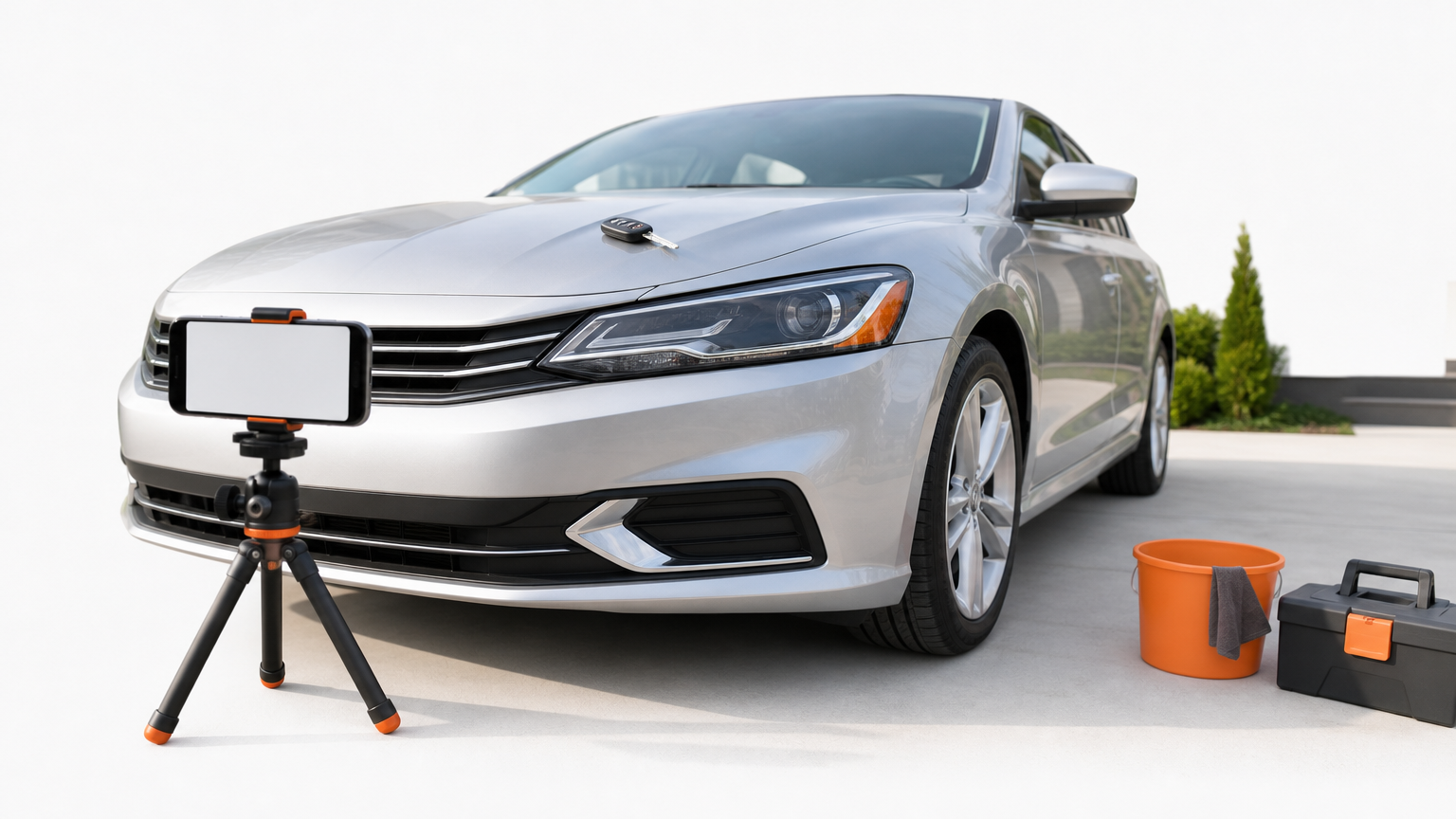
You get the final offer instantly after the call, so there is no range to haggle over and no in-person visit. If you accept, you schedule pickup when it suits you. The appraisers handle the purchase agreement, title transfer, and DMV paperwork.
The offer you hear at the end of a 10-minute video call is final, and you never visit a dealership.
What it costs and how you get paid
The appraisal and offer are free and carry no obligation, so you can compare the number against any other site. Payment is a same-day wire as soon as the car is picked up. Certified check and direct bank transfer are also available.
- Accepts all years, makes, and models
- Prices from real-time market data and professional evaluation
- Beats competing dealer offers by up to $1,000
- Free vehicle valuation reports show your car’s market value before you decide
Here is how the match works in practice. If the best dealer bid you collect is $13,500, the match could lift your offer by up to $1,000, to as much as $14,500.
Who it suits
Car Trackers suits busy sellers, people getting out of a lease, and owners upgrading who do not want to visit several dealerships. It holds 4.5 stars on Yelp. The trade-off is that a private buyer on a marketplace may pay more if you can wait weeks for the right one. Treat the instant offer as your floor price.
2. Autotrader
How it works
Autotrader is a long-established marketplace where you list the car yourself and sell it to a private buyer. You pick a listing package, upload photos, and write the description. Listings also appear on Kelley Blue Book, which adds reach. The search filters are strong, so serious buyers find cars by trim, mileage, and features.
Autotrader also offers an instant cash offer and a way to sell to a dealer. That makes it one of the few sites that covers both private and instant routes.
Autotrader gives you the biggest private audience, but the selling is still your job.
What it costs and how you get paid
Autotrader charges for listing packages, and the price depends on the package you choose. Some packages reportedly come with a no-sale, no-charge guarantee. Read the terms before you buy one.
You get paid by the buyer, so you handle payment yourself. Wait until the funds clear before you sign over the title. A cashier’s check should be verified with the issuing bank.
Who it suits
Autotrader suits sellers who want near-retail money, have a car in good condition, and are willing to answer messages, host test drives, and manage paperwork. It is a poor fit if you need the car gone this week.
3. Cars.com
How it works
Cars.com lets you list your car for free or with a paid upgrade. Paid listings may also appear on sister sites such as Auto.com, PickupTrucks.com, and NewCars.com. The site also has an instant route: you start with your plate, VIN, or a few photos and get a cash offer.
The catch with a big marketplace is competition. Hundreds of similar cars may sit next to yours, so the first photo and the price decide whether anyone clicks.
On a huge marketplace, your photos and price do more selling than your description.
What it costs and how you get paid
A basic listing is free, and paid options add visibility. With a private buyer you collect payment yourself, as on Autotrader. With the cash-offer route, the buyer pays you, but the offer will usually sit below what a private buyer would pay.
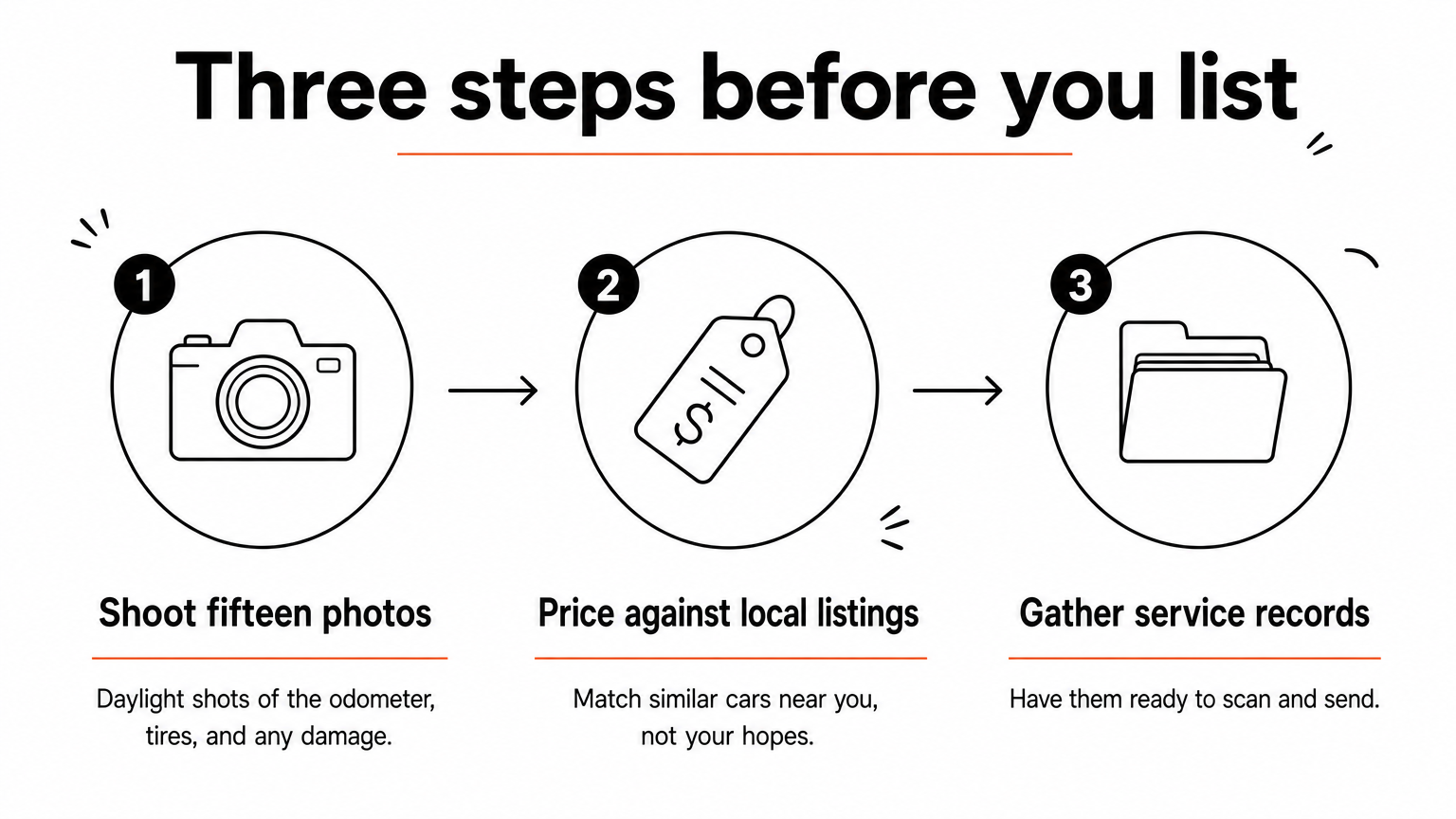
Before you list, do this:
- Shoot 15 or more photos in daylight, including the odometer, tires, and any damage.
- Price the car against similar listings in your area, not against your hopes.
- Keep service records ready to scan and send.
Who it suits
Cars.com suits sellers of popular models, such as common sedans and crossovers, where buyer demand is steady. Rare or niche vehicles can get lost. It also suits you if you want a free listing and an instant offer on the same site.
4. CarGurus
How it works
CarGurus is built around deal ratings. Every listing is scored from a great deal to overpriced, and shoppers scan by that rating. You create a listing, and buyers contact you through the site. In select markets, CarGurus also lets you compare multiple instant offers from buyers in a couple of minutes.
The rating is the thing to understand. If you price above market, your car may be labeled overpriced, and many shoppers will skip it.
On CarGurus, an honest price gets seen and an ambitious price gets buried.
What it costs and how you get paid
Listing is free. The reported cost is a one-time $99 fee if the car sells, regardless of the price. On a $15,000 sale, you keep $14,901 before any other costs. That is small next to a dealer’s trade-in margin.
You collect payment from the buyer yourself, so the same rule applies: wait for cleared funds before the title changes hands.
Who it suits
CarGurus suits sellers who price at or slightly under market and want fast traffic from informed shoppers. It does not suit you if you plan to hold out for a premium price. The rating will work against you, and you will wait.
5. CarMax
How it works
CarMax gives you a real offer online in about two minutes. To complete the sale, you take the car to a CarMax store for an in-person appraisal, which confirms the offer or adjusts it. If you agree, CarMax handles the paperwork and you leave with a check.
The process is predictable, which is why people use it. You know where to go and what happens next.
CarMax trades a little money for a lot of certainty.
What it costs and how you get paid
There is no listing fee. You will usually get less than you would from a private buyer, as with most instant buyers. The check at the store is what you pay for: no strangers, no test drives, no payment risk.
Treat the online number as a quote to compare. Get another offer before you drive to the store, because the in-person appraisal is where an offer can change.
Who it suits
CarMax suits sellers who live near a store, want a same-visit sale, and care more about certainty than the last few hundred dollars. If a store is far away, or you want pickup at home, a remote option fits better.
6. Carvana
How it works
Carvana buys cars online and works across the country. You enter your vehicle details, receive an offer, and if you accept, Carvana schedules a pickup at your location. A driver arrives, takes the car, and hands over payment, so there is no store visit.
That convenience matches the video-based model above, but the process differs. Ask whether the online offer is subject to an inspection at pickup, and what happens to the price if the inspection finds something.
Carvana brings the buyer to your driveway, so confirm the offer survives the pickup inspection.
What it costs and how you get paid
Carvana charges no listing fee. As a retailer, it pays what it expects to resell the car for, minus its margin. That means offers vary by model and by how well the car fits its inventory.
Request an offer and write it down with the date. Offers from retail buyers move with the market, so compare yours the same day.
Who it suits
Carvana suits sellers who want a no-meeting sale with pickup and who live outside the reach of a CarMax store. It is one more number to collect, and it is quick to get.
7. Craigslist
How it works
Craigslist is a free local classified site. You post photos and a description, and nearby buyers reach out. Because there is no gatekeeper, you can price the car where you like and negotiate directly. The market is local, so sales can take longer than on national sites.
The local, no-fee nature is the draw. It is also where most scams live, so you need ground rules.
Craigslist can bring the best net price, but only if you screen buyers like a professional.
What it costs and how you get paid
Posting a car for sale is free in most places, so the whole sale price stays with you. The cost is your time and your risk. Meet in a public place, never hand over the title before funds clear, and ignore anyone who offers to overpay by check.
Complete the paperwork carefully. Prepare a bill of sale and check your state’s DMV rules for title transfer and notifying the state that you sold the car.
Who it suits
Craigslist suits patient sellers with older or lower-priced cars, especially under about $10,000, where marketplace fees and instant-offer margins take a bigger bite. It is the wrong choice if you are busy, nervous about strangers, or short on time.
Choosing where to sell your car
If you have time, list on one private marketplace, such as Autotrader, Cars.com, or CarGurus, and price the car at market value. If you want it gone fast, use an instant buyer. The smartest move is to do both: get an instant offer first so you know your floor, then see whether a private listing can beat it within a week or two.
Collect at least two offers, compare the amount you actually keep after fees, and ask when the money lands. When you are ready to see a real number, get your free instant offer from Car Trackers by booking a 10-minute video call with no obligation.
