

The right answer to where to sell a used car depends on whether you value price, speed, or effort most. A remote buyer like Car Trackers suits busy owners who want a firm offer and same-day payment without leaving home. Online instant-offer programs suit people who want a quick benchmark number. A dealership trade-in suits anyone buying another car. A private sale suits sellers who want the highest price and can spare the time. A local used-car lot suits sellers who want cash fast and already hold another offer.
Most owners run into the same problem. Every buyer quotes a different number, and collecting those quotes can eat a weekend of driving, waiting, and haggling. You also rarely know if the number you got is fair.
This guide walks through five places to sell your car for cash. For each one, you will see how it works, who it fits, and where it can cost you money. Collect two or three offers, compare them, and take the best one.
1. Car Trackers video appraisal and pickup
Car Trackers is the pick for owners who want a firm offer and same-day payment without visiting a dealership. You handle the whole sale from your phone.
How it works
You submit your vehicle details online, then book a 10-minute video call on your smartphone. The appraiser checks the car’s condition on camera, and you get a final offer instantly after the call. You can take the call at home, at work, or anywhere with a network connection.
If you accept, licensed appraisers handle the purchase agreement, the DMV paperwork, and the title transfer. You schedule pickup when it suits you, and payment arrives by same-day wire once the car is picked up. Certified checks and direct bank transfers are also available.
The video appraisal replaces the drive to three dealerships with one ten-minute call.
Who it suits and what to watch
This fits busy sellers, people getting out of a lease, and anyone who dislikes negotiating. Car Trackers accepts all years, makes, and models, and the appraisal is free with no obligation. It also offers to beat a competing dealer offer by up to $1,000. If a dealer offers you $14,000, that means up to $15,000.
Plan for a decent phone connection and a clean car in good light, so the appraiser can see the condition clearly. Check the free vehicle valuation report first, so you know the market value before you hear any number. The business holds 4.5 stars on Yelp.
2. Online instant-offer buyers
Online instant car offer programs give you a cash number in minutes from a VIN or license plate. You usually still bring the car in, so they work best as a price check.
How it works
You enter your VIN or plate and answer a few questions about the car. Tools such as Edmunds’ appraisal and Cars.com’s instant offer return a number, and the offer is typically good for about seven days. Sellers in local forums also often point to CarMax and Carvana as the first quotes to collect.
To cash the offer, you take the car to a participating dealer. A quick inspection follows, and you leave with a check if the car matches what you reported.
An instant offer costs nothing to get, so collect one before you commit anywhere else.
Who it suits and what to watch
These programs suit sellers who want a fast, no-pressure benchmark. The seven-day window lets you shop around before deciding. They are less convenient than a remote sale, because you still drive to a location.
The offer rests on what you report. If you overstate the condition, the number drops at inspection. Be honest about dents, warning lights, and service history, and the final figure will stay close to the quote.
3. Dealership trade-in or buy-now offer
A dealership is the easiest place to sell if you are buying another car, and in many states a trade-in also lowers your sales tax.
How it works
Franchised dealers appraise your car in person. Dealerships calculate car value using guides like Black Book and Manheim Market Report, a vehicle history report, and the car’s physical condition. Many will also buy your car outright without a purchase from them. Written offers commonly last about seven days or a mileage cap, such as 200 to 500 miles.
Expect the number to shift at inspection. Frame damage, flood history, a salvage or branded title, and odometer problems can all lower it.
A trade-in often wins on convenience, and sometimes on tax, even when it loses on sticker price.
Who it suits and what to watch
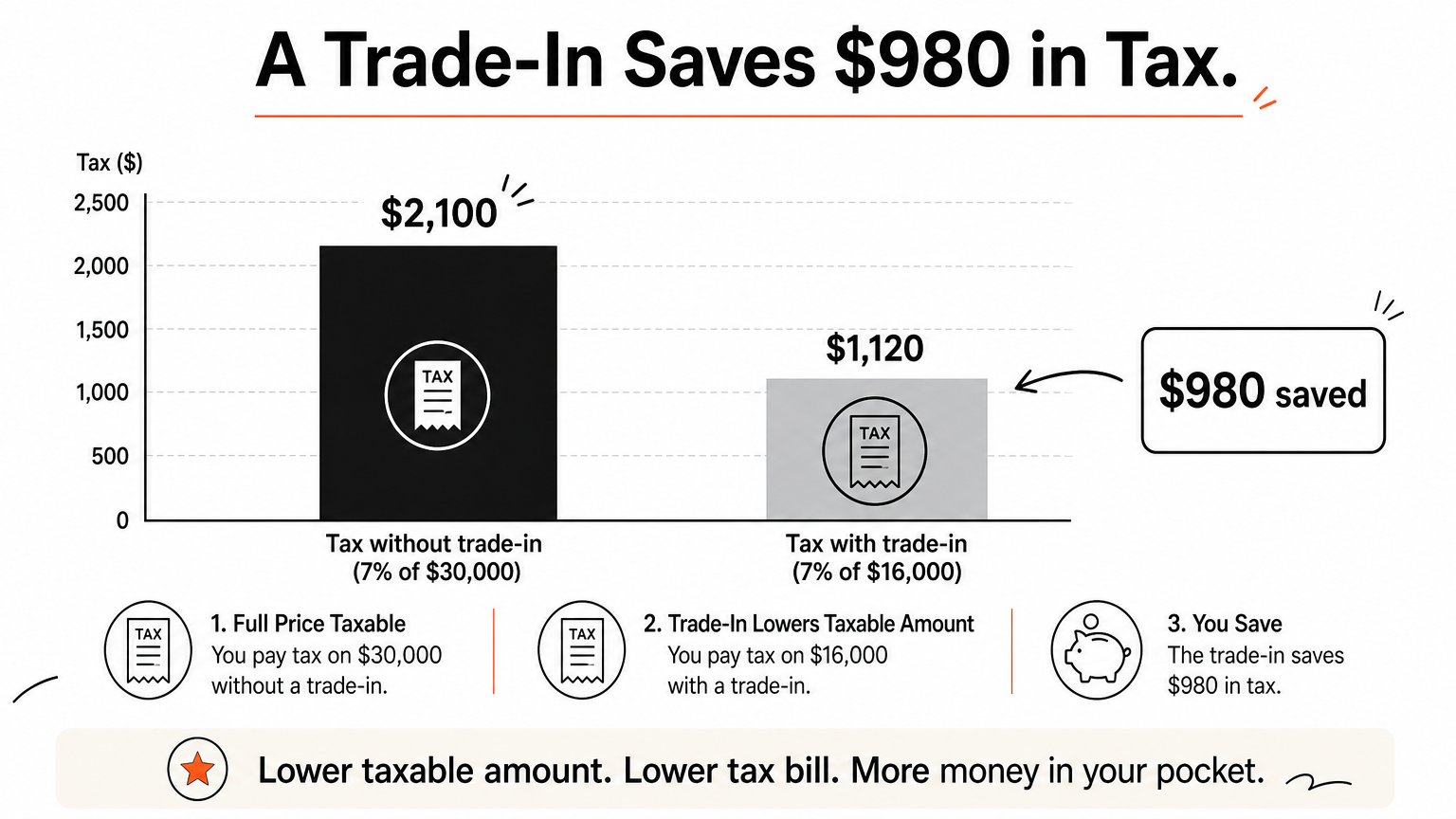
This suits buyers who want one transaction and one set of paperwork. Here is a worked example. You trade in a car for $14,000 toward a $30,000 purchase, in a state that taxes only the difference. You pay tax on $16,000, and at a 7% rate that saves $980. A private sale must beat the trade-in by more than $980 to come out ahead.
Tax rules differ by state, so confirm yours with your DMV or the dealer. The credit generally does not apply when you sell the car yourself.
4. Private sale on online marketplaces
A private sale usually brings the highest price, but it demands the most time and effort. Record trade-in values have narrowed the gap, so compare selling privately or trading in before you commit.
How it works
You list the car on a site such as Autotrader, Cars.com, or Facebook Marketplace. Price it against comparable listings, shoot clear photos, and write an honest ad. Then you show the car and negotiate. Keep your title, registration, and ID ready, plus lienholder details if you still owe on a loan.
Close the deal safely. Meet in a public place, confirm the funds have cleared at your bank before you sign over the title and keys, and file your state’s notice of sale so later tickets do not land on you.
The extra money from a private sale is payment for your time, so count your hours.
Who it suits and what to watch
This suits sellers with spare time, a popular model, and comfort dealing with strangers. Expect lowball messages, no-shows, and the occasional scam attempt.
Count your hours before you choose it. If a private sale nets $1,000 more than your best offer but takes 10 hours of messages, calls, and showings, you earned $100 an hour. If it nets $300 more, you earned $30. Decide whether that is worth it.
5. Independent used-car lots
Independent used-car lots buy cars to resell, so a quick quote from a larger one is a useful extra offer.
How it works
You bring the car, they inspect it, and they quote a number on the spot. Many pay the same day. Their offer reflects what they expect to resell the car for after reconditioning, so clean, popular models with clear titles draw the strongest bids. Sellers in local forums often recommend the bigger used-only lots first.
Quality varies more here than with national programs. Ask for the offer in writing and confirm exactly how and when you will be paid.
Treat a local lot as a second opinion on price, not your only quote.
Who it suits and what to watch
This suits sellers who want cash today and already hold one solid offer. Use your best earlier number as your floor. If the lot cannot match it, you lose nothing but a short drive.
Never sign over the title until payment has cleared or you have verified it. A fair buyer will not rush you through that step.
Which option to try first
Start with a baseline offer. For the fastest path with the least effort, a remote appraisal wins. For the most money, a private sale usually wins, if you have the time. For a car you are replacing, check the trade-in tax saving before you decide. Collect two or three offers in one afternoon and compare the real totals, including your time.
If you want a firm number without leaving the house, book a video call appraisal with Car Trackers. It takes one 10-minute video call, costs nothing, and you can decline.
