

The best way to sell a used car depends on what you value most. If you want the highest price and have weeks to spare, a private sale usually pays the most. If you want a strong offer fast, without strangers at your door, a remote buyer like Car Trackers fits best. If you are buying another car at the same time, a dealer trade-in is the simplest path. The other options below fall between those poles.
Most owners take the first offer they get, usually from the first dealership they visit. That is expensive, because offers for the same car can differ by hundreds or even thousands of dollars depending on who needs your model. The real problem is not finding a buyer. It is knowing which kind of buyer will pay the most for your car, with the least work from you.
This article compares seven places to sell: how each works, who it suits, and what it costs you in money and time. After the list you get a side-by-side table, a worked example, and a checklist of what to prepare. Car Trackers is our own service, so it comes first, and we say plainly where it does not fit.
1. Car Trackers video appraisal
How it works
Car Trackers buys your car remotely, so you never visit a dealership. You submit your vehicle details online, book a time, and a licensed appraiser inspects the car with you on a 10-minute smartphone video call. The steps are:
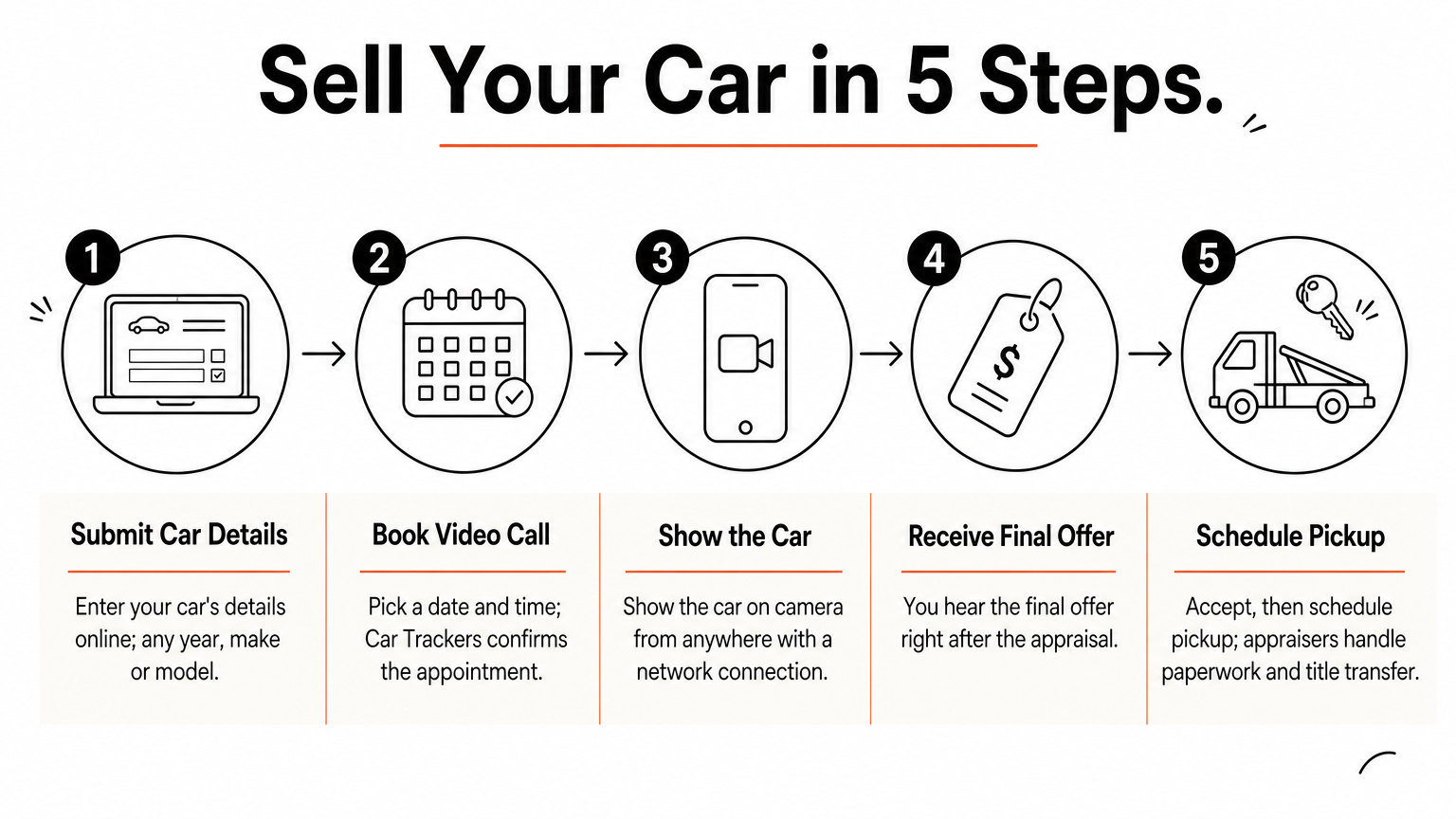
- Submit your car’s details online. Any year, make or model is accepted.
- Pick a date and time for the video call. Car Trackers confirms the appointment.
- Show the car on camera from your home, your work, or anywhere with a network connection.
- Receive the final offer right after the appraisal.
- If you accept, schedule pickup. Licensed appraisers handle the purchase agreement, title transfer and DMV paperwork.
You show the car once, on camera, and the offer you hear is the final one.
Who it suits
Car Trackers suits owners who value their time more than the last few hundred dollars a private sale might add. It is a good match when you are upgrading to another vehicle and do not want to spend weekends collecting quotes. The process is the same for a ten-year-old commuter car and a late-model SUV.
Skip it if you plan to trade in toward a purchase at a dealership, where a trade-in can lower your sales tax in many states. Skip it too if you enjoy negotiating with buyers yourself.
Price and trade-offs
The appraisal is free and carries no obligation, and offers are based on real-time market data and professional evaluation. Car Trackers says it beats most dealership offers by up to $1,000, and its price match works against a competing dealer offer. Payment arrives by same-day wire as soon as the car is picked up, and a certified check is also available. The business holds 4.5 stars on Yelp.
The trade-off is simple. A buyer that resells your car cannot pay what a retail buyer would pay you directly. A patient private seller can still come out ahead, as the comparison later shows.
2. Dealer trade-in
How it works
A trade-in means you hand your old car to a dealership as part of buying another one. An appraiser inspects the car, often drives it, and quotes a value that is credited against your next purchase. The dealer also pays off any loan on the old car and files the paperwork.
You can finish everything in one visit, which is why trade-ins feel easy. The convenience comes bundled with a catch, though. The dealer controls both the trade value and the price of the car you are buying.
Who it suits
Trade-ins suit you if you are already buying from that dealer and want one transaction. In many states you also pay sales tax only on the difference between the new car’s price and your trade-in value, so check your state’s rule before you decide. That tax saving can close part of the gap to a higher private-sale price.
They suit you poorly if you are not buying a car right now. In that case you would be giving up the dealer’s main incentive to pay well.
Price and trade-offs
Trade-in offers are usually lower than private-sale prices, because the dealer must recondition and resell the car at a margin. They also move with the dealer’s inventory needs, so the same car can draw very different numbers at two lots.
The best protection is to settle your trade value first. Ask for a written trade offer before you discuss the price of the new car, and compare it with at least two outside offers.
Negotiate the trade-in and the new car as two separate deals, or the dealer can hide a low number inside a good-looking one.
3. Dealership cash offer without a purchase
How it works
Many franchised dealers will buy your car outright, with no purchase required. You fill in an online valuation form or walk in, and an appraiser inspects the car. Some dealers quote about 30 minutes for the appraisal. You then get a written offer, and if you accept, you leave with a check or payment the same day.
Bring the title or your loan payoff details, your registration, your driver’s license and every key. Ask how long the offer stays valid, because dealers typically hold it for a limited window, such as a week.
Who it suits
This option suits you if you live near a dealership and want cash in hand without buying anything. It works especially well when your car matches the dealer’s brand. A late-model Honda at a Honda dealer is more likely to become that dealer’s used inventory than a car from another make.
Instant-cash tools such as Kelley Blue Book’s Instant Cash Offer route you to participating dealers in the same way. They are worth trying if you want a quick local number to compare.
Price and trade-offs
Offers run from fair to weak depending on how much the dealer wants your exact model. They rarely match what a private buyer would pay, and they are often negotiable.
Because the offer is firm only after an in-person look, expect an adjustment if the appraiser finds scratches, worn tires or a missing service record. Photograph your car’s condition before you go, so you can discuss any deductions.
A dealer that wants your car as inventory will pay more than a dealer that merely tolerates it.
4. Online instant-offer services
How it works
Instant-offer services ask for your VIN or license plate, mileage, condition and a few photos or details. They return an estimated offer within minutes. Many then confirm it with an inspection at a drop-off location or a pickup at your address, and pay by check or direct deposit.
Process details vary by company, so read the terms before you start. The key question is whether the online number is a final offer or only an estimate.
Who it suits
These services suit owners who are comfortable doing everything online and want a baseline number without leaving the couch. They are a quick way to test the market before you invest time in listings or dealer visits.
They are less useful if your car has unusual modifications, heavy damage or a rare trim. Those factors push a computed quote away from the real value, and the final number can move after inspection.
Price and trade-offs
The headline offer is often conditional on the inspection. If the inspector finds issues you did not list, the price can drop on the spot, and by then you may have already arranged your day around the sale.
Before you accept any online offer, check three things:
- Whether the quote is guaranteed or an estimate
- How long it stays valid
- When and how the money reaches you
An online quote is only as good as the inspection that follows it.
5. Private sale on listing sites and classifieds
How it works
In a private sale you advertise the car yourself on a listing site, a local classifieds board or a social marketplace, and sell it to the final buyer directly. You write the ad, take photos, answer messages, host test drives and handle the paperwork. Many sites let you post free or for a modest fee.
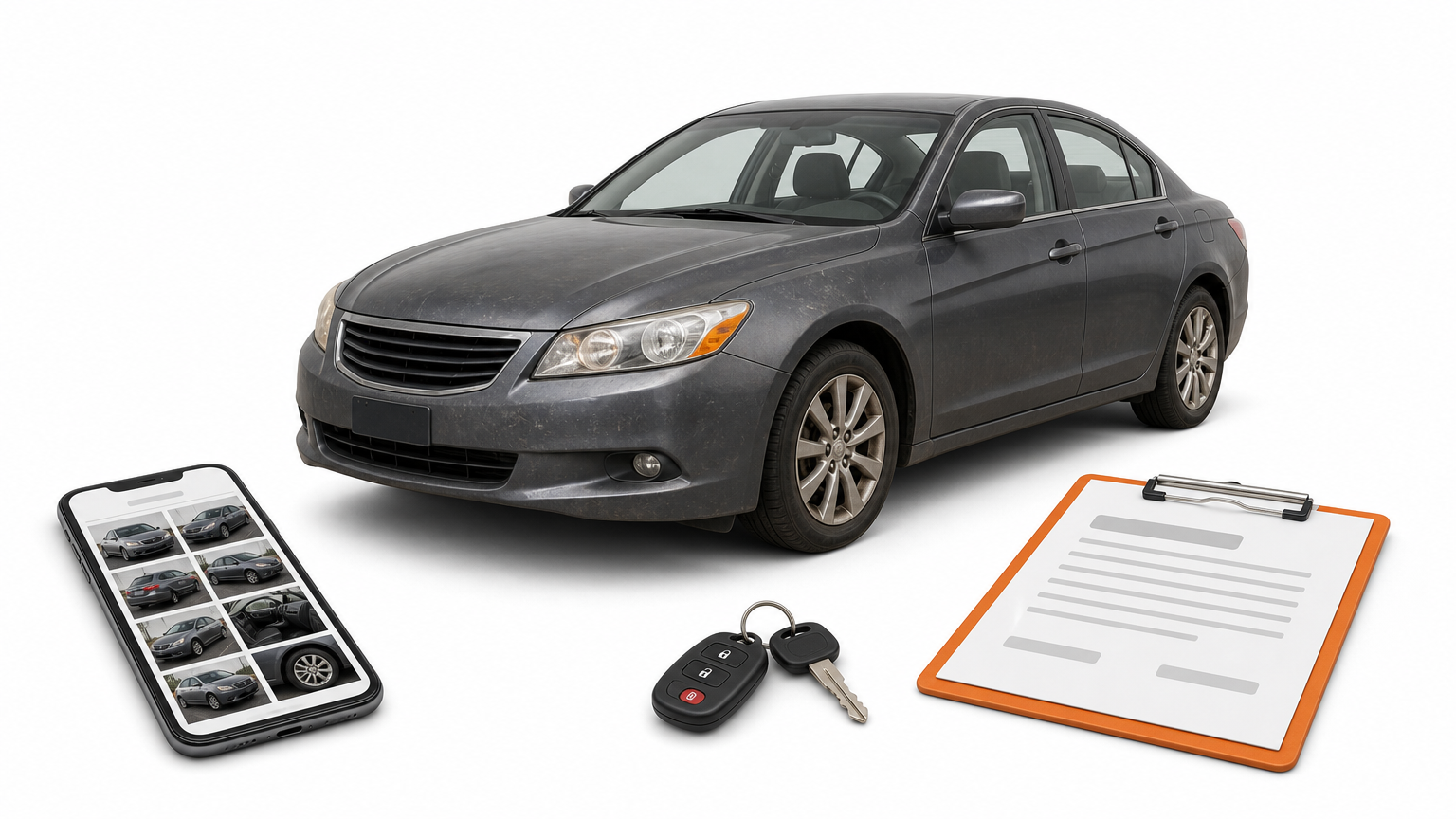
Clean, bright photos from every angle, honest condition notes and the maintenance history make the biggest difference. Meet buyers in a public place, and never hand over the keys before payment has cleared.
Who it suits
Private sales suit sellers with time, patience and a car in good shape. They also fit popular models that sell quickly, such as common sedans and trucks. If you are willing to answer messages for a few weeks, this is where the highest price lives.
They suit you poorly if you are short on time, uncomfortable with strangers, or selling a car with open mechanical issues that will generate haggling.
Price and trade-offs
A private buyer pays retail, so your price is usually higher than any dealer or instant offer. The cost is your time, the negotiation and the risk. Watch for payment fraud, especially bogus cashier’s checks. Verify funds with the issuing bank before you sign over the title, or complete the sale inside the bank.
You also handle the title transfer, bill of sale and any state forms. Requirements differ by state, so check your DMV’s website first.
Private sale pays the most, and it charges you in time, messages and risk instead of money.
6. Local independent used-car lots
How it works
Independent used-car lots buy cars from the public to refresh their inventory. You bring the car, the dealer’s buyer inspects it, and you receive a same-day offer, often within an hour or two. Some also advertise "cash for cars" with simple paperwork.
Call ahead and ask what models they are currently buying. Check that the business is a licensed dealer, and ask for a written bill of sale that names both parties and the odometer reading.
Who it suits
These lots suit owners of older or high-mileage cars that franchised dealers pass on. They are also useful when you need cash quickly, since small lots can decide fast without corporate approval. A lot that sells your type of vehicle every week knows exactly what it is worth.
They suit you poorly if your car is nearly new, since those usually earn more from a franchised dealer’s used-car department.
Price and trade-offs
Offers vary widely from lot to lot, which is both the risk and the opportunity. Visiting two or three lots can reveal a spread of several hundred dollars. A lot that has a similar car sitting unsold will quote low, and one that just lost a similar car to a buyer will quote high.
Never sign the title until you have the payment in hand. File a release of liability with your DMV after the sale, if your state offers one.
At a small lot, the offer reflects what that lot needs this week, so ask more than one.
7. Dealer or broker consignment
How it works
With consignment, a dealer or broker lists and sells your car on your behalf. A buyer pays them, and you receive the sale price minus an agreed fee or commission. You keep ownership until the car sells, and you should have the terms in writing.

Ask for the commission or flat fee, the minimum price, how long the listing runs, and who pays for detailing or repairs. Also ask whether the car stays on their insured lot, because liability during the listing should be clear.
Who it suits
Consignment suits owners of specialty, classic or high-value cars that attract buyers who want a seller with expertise. It also suits people who want retail-style pricing without taking test drives themselves.
It suits you poorly if you need money soon. The car can sit for weeks or months, and you have no payment until the sale closes.
Price and trade-offs
The sale price can beat a dealer’s cash offer, but the fee comes out of it. Weigh the fee against how much extra the retail price brings. If the commission eats most of the gain over an instant offer, consignment is not worth the wait.
Get a written agreement, and confirm what happens if the car does not sell by the end of the term.
Consignment trades a retail price for a commission and a wait.
How to compare your options and prepare to sell
Side-by-side comparison
Use this table to match each option to your priorities. The ratings describe typical outcomes, not guarantees, and your car and market will shift them.
| Option | Typical price | Speed | Your effort | Payment |
|---|---|---|---|---|
| Car Trackers | Competitive, up to $1,000 over dealer offers | Same-day offer, same-day wire after pickup | Low (10-minute video call) | Wire or certified check |
| Dealer trade-in | Low to moderate | Same day | Low | Credit toward your next car |
| Dealer cash offer | Moderate | Often same day | Low to medium | Check or similar |
| Online instant-offer service | Moderate, often conditional | One day to several days | Low | Varies by company |
| Private sale | Highest potential | Days to weeks | High | You must verify funds |
| Independent used-car lot | Varies widely | Often same day | Medium | Varies by lot |
| Consignment | High, minus a fee | Weeks | Low to medium | After the sale closes |
A worked example
Say a dealer offers you $13,200 for your car. A price match of up to $1,000 from Car Trackers would bring that to as much as $14,200. Now suppose you list the car privately and, after weeks of messages and test drives, sell it for $14,500. You earn about $300 more than the matched offer, and you pay for it with time and risk. That example is illustrative, but the pattern is real: the gap between the best instant offer and a private sale is often smaller than people expect.
So who will pay you the most? A private buyer pays the highest price, followed by the buyer who needs your specific model right now. A good rule is to collect three offers on the same day, because offers expire and market conditions change.
What to have ready
Gather these before you request any offer:
- The title, or your lender’s payoff details if you still owe on the car
- Your current registration and a valid driver’s license
- Every key and fob
- Service records and the current odometer reading
- Photos of the car in daylight, including any damage
After the sale, cancel your insurance on that car only once the title transfer is complete, and file your state’s release of liability. Rules differ by state, so check your DMV.
The best price comes from comparing three offers on the same day, not from picking the fanciest buyer.
Pick the option that fits your week
The right buyer is the one that matches your priorities. A private sale pays the most for people with time. A dealer trade-in works when you are buying another car at the same dealership. Cash offers and local lots help when you want money fast and live nearby. Consignment suits high-value cars that can wait. If you want a strong offer from home with the least work, a video appraisal covers it.
Whatever you choose, get more than one offer, read what is guaranteed, and keep your paperwork ready. If you want a no-obligation number to compare against the rest, get a free video appraisal from Car Trackers and hold it up against any dealer quote you collect.
