

You need cash fast and you’re tired of the usual runaround: driving to three dealerships, sitting through lowball trade-in offers, then waiting days for a check to clear. If you want to sell your car quickly without losing money on the deal, you’re in the right place. Most sellers assume speed and a good price are a trade-off. They’re not, once you know which options actually pay fast and which ones just waste your Saturday.
The fastest, most reliable way to sell my car quickly is through an online buyer that gives you a real offer before you ever leave your driveway. A short video call appraisal, an instant offer, and same-day payment at pickup beats waiting around a dealer lot for a manager to "run the numbers." No test drives, no back-and-forth negotiating, no strangers showing up from a classifieds ad.
This guide walks through exactly how to sell your car fast for cash, step by step: what to prepare before you request an offer, how to compare dealer trade-ins against online buyers like Car Trackers, and how to spot a lowball number before you sign anything. By the end, you’ll know where to sell your car fast and how to get the best offer on the first try.
Know your options before you start the sale
Before you decide where to sell your car fast, you need to understand the three real paths available: selling privately, trading in at a dealership, or working with an online cash buyer. Each one has a different tradeoff between price, speed, and hassle, and picking the wrong one for your situation is how sellers end up stuck for weeks. If you’re thinking "I need to sell my car fast" and don’t have time to babysit a Craigslist listing, some of these options simply aren’t worth your time.
Private sale: highest ceiling, slowest floor
Selling to a private buyer can get you the highest sale price on paper, but it comes with real costs: photographing the car, writing a listing, fielding calls from people who never show up, and hosting strangers for test drives at your home. Escrow issues, bounced checks, and no-shows are common complaints from private sellers, and the process often stretches two to six weeks even in a hot market. If your goal is genuinely to sell my car fast for cash, a private sale compared to selling online usually works against you unless you already have a buyer lined up.
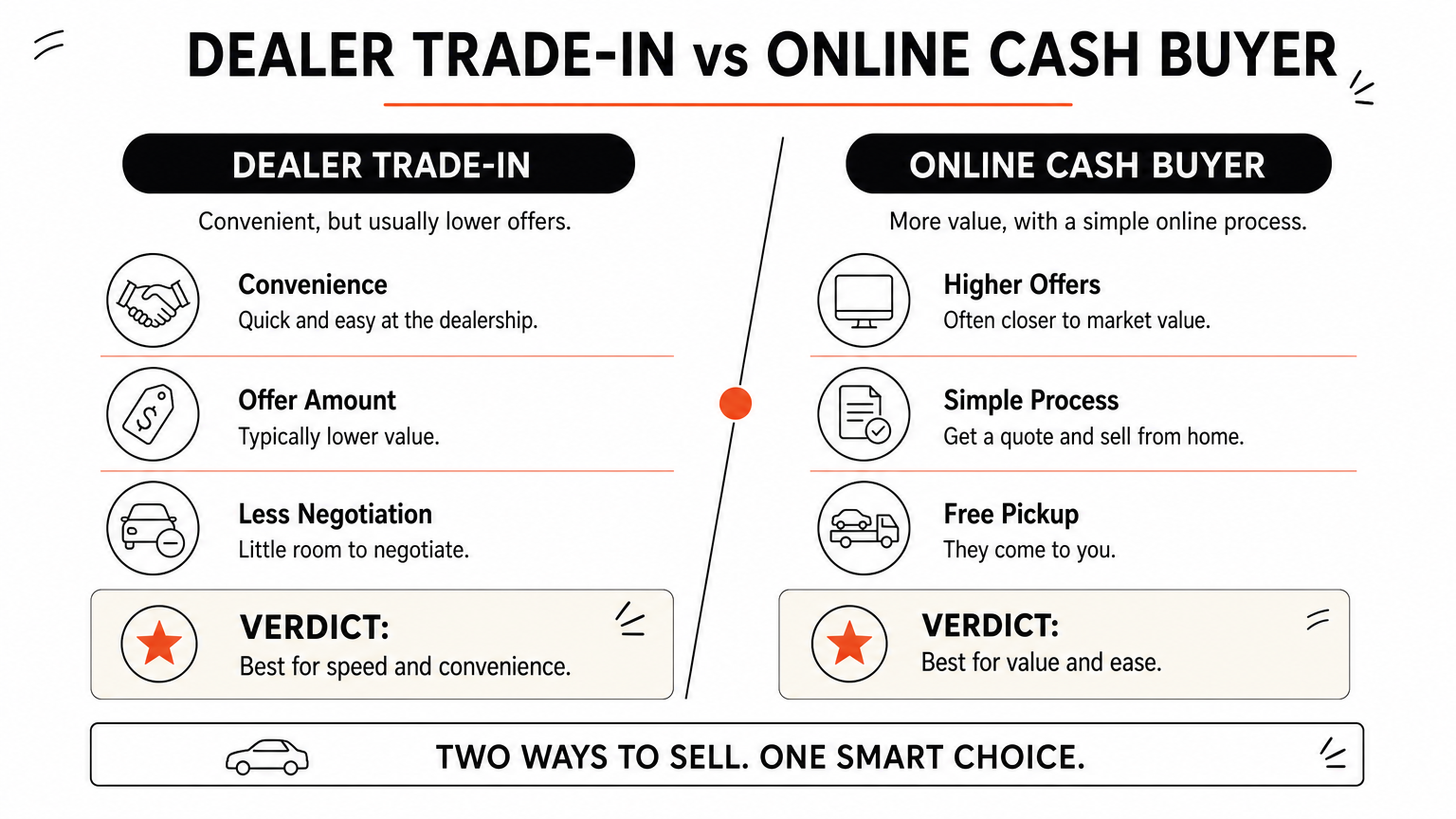
Dealer trade-in: convenient but rarely competitive
Trading in versus selling your car online is fast in the sense that you can walk in and walk out the same day, but the dealership offer is almost always lower than what your car is worth. Dealers build their trade-in offers around resale margin, not your car’s true market value, and they know most people accept the first number rather than negotiate. This route makes sense only if you’re also buying a replacement vehicle from that same dealer and want the trade-in credit applied on the spot.
A fast sale only counts as a good deal if the offer reflects what your car is actually worth.
Online cash buyers: speed and price without the tradeoff
Online buyers like Car Trackers close the gap between those two extremes. You submit your vehicle details, complete a short video call appraisal, and get an instant offer, all without leaving your house, which is why a mobile car buying service is more convenient. Because the overhead is lower than a physical dealership lot, these offers frequently beat trade-in numbers, and Car Trackers backs that up with a price-match guarantee that beats competing dealer offers by up to $1,000. Payment arrives by wire the same day your car is picked up, which solves the two biggest complaints sellers have: waiting for money and coordinating drop-off logistics.
Comparing your three options at a glance
| Selling method | Typical timeline | Price potential | Effort required | Payment speed |
|---|---|---|---|---|
| Private sale | 2 to 6 weeks | Highest, if you find the right buyer | High: listing, showings, negotiating | Varies, risk of delays |
| Dealer trade-in | Same day | Below market value | Low | Same day, tied to new purchase |
| Online cash buyer (Car Trackers) | Same day to 48 hours | Competitive, often above trade-in | Low: video call, no visit needed | Same day wire at pickup |
Weighing these three against your own timeline is the real first move. Someone who needs a check next week to cover a new lease payment has a very different answer than someone who’s fine waiting a month for top dollar from a private buyer, so it helps to know how long it takes to sell a car by each route. The next section breaks down how to match your specific situation, whether you’re asking how to sell my car fast because of a move, a repo deadline, or just wanting the cash in hand, to the method that actually fits.
Step 1. Choose the fastest selling method for your situation
Matching your timeline to the right method saves you the most time in this whole process. If you’re asking how can I sell my car fast because you’re relocating in ten days, a private sale is off the table before you even start, no matter how good the price might be. Give yourself thirty seconds to answer one question honestly: do you need the cash this week, or can you wait a month for a slightly higher number? That single answer eliminates two of your three options almost instantly.
Deadlines change everything here. Someone facing a repossession date, a lease turn-in, or a job relocation can’t afford the two to six week window a private sale usually takes, even if craigslist buyers are messaging within hours. In that situation, an online cash buyer is the only realistic path, and the benefits of selling to mobile car buyers come down to compressing the entire timeline into a video call and a same-day pickup.
If your deadline is measured in days, cross private sale off your list and don’t look back.
Overhead is the other filter worth applying before you request any offers. Ask yourself if you have the time and patience for listing photos, buyer texts, and in-person showings, because that’s what a private sale actually demands of you. People who need to sell my car fast rarely have that bandwidth, and it’s the main reason online buyers exist in the first place.
Questions worth running through before you pick a method:
- Do you have a hard deadline (move, repo, lease return) inside the next two weeks?
- Are you willing to host strangers at your home for test drives?
- Do you need the full payment to clear before you can make your next purchase?
- Is your car’s condition something you can accurately describe over a video call?
- Would a same-day wire payment solve more problems than chasing a slightly higher private-sale number?
Thinking through these five points takes less time than photographing your car for a listing. Verdict: if you answered yes to two or more, an online cash buyer like Car Trackers is your fastest legitimate path, and the instant offer request takes less time than a single dealership visit. Understanding which lane fits your situation is step one. Step two is making sure whatever offer you get actually reflects your car’s real value, not a lowball number dressed up as a favor.
Step 2. Find your car’s real market value
Determining your car’s value and setting the right selling price before you request any offer is what separates a fast sale from a rushed one. Knowing your car’s real market value means you can spot a lowball offer in seconds instead of wondering if you’re leaving money on the table. Skip this step and you’re negotiating blind, which is exactly how sellers end up accepting the first number a dealer throws out without understanding how dealerships calculate car value.
Pull numbers from more than one source
Start with at least two independent vehicle valuation methods rather than trusting a single estimate. Kelley Blue Book and Edmunds both let you enter your VIN, mileage, and condition for a free instant estimate, and running the same details through both sites usually gives you a price range rather than one fixed figure. NADAguides is worth a third check if the first two numbers disagree by more than a few hundred dollars, since that gap usually points to a mistake in how you entered mileage or trim level.
Never accept an offer against a number you pulled from a single source.
Be honest about condition
Condition is where most sellers inflate their own estimate without realizing it. "Excellent" on these tools means no mechanical issues, no cosmetic damage beyond normal wear, and full service records, not just a car that runs fine. Grade your car honestly using this quick checklist before you settle on a number:
- Any warning lights currently on the dashboard
- Tires with less than 4/32" tread remaining
- Visible dents, scratches, or windshield chips
- Interior stains, tears, or worn upholstery
- Missing maintenance records or a lapsed timing belt service
Each item you check pulls your estimate down from the "excellent" tier toward "good" or "fair," which changes your number by hundreds or sometimes thousands of dollars.
Factor in your local market
Regional demand shifts your number too, sometimes more than condition does. A truck or SUV often sells for more in areas with rougher winters or more rural driving, while sedans and hybrids tend to command a premium in cities with longer commutes and higher gas prices. If you’re trying to figure out where to sell your car fast for the strongest number, check whether your specific make and model is in higher demand locally before you accept any single offer. Once you have a realistic range in hand, you’re ready to prep the car itself and gather the paperwork that speeds up everything that follows.
Step 3. Prep your car and gather the paperwork
Getting your car and documents ready before you request an offer shaves real time off the back end of the sale. A little prep work now means the video appraisal goes faster and the pickup happens without last-minute delays, which matters most if you’re trying to sell your car quickly on a tight deadline. Skipping this step is the most common reason a same-day deal turns into a three-day wait.
Clean it, but don’t overdo it
Washing the exterior, vacuuming the interior, and wiping down the dashboard takes twenty minutes and makes a real difference during a video call appraisal, since the appraiser is judging condition largely on what they can see through your phone camera. Skip the detailer and the paint touch-up kits though. Spending $200 on cosmetic fixes rarely adds that much back to your offer, and licensed appraisers are trained to look past surface dirt anyway.
A clean car photographs honestly. An overhauled one just wastes your money before the sale.
Gather your paperwork before the call
Having the documents required to sell a car in California on hand turns the appraisal call into a formality instead of a scavenger hunt. Pull these together the night before:
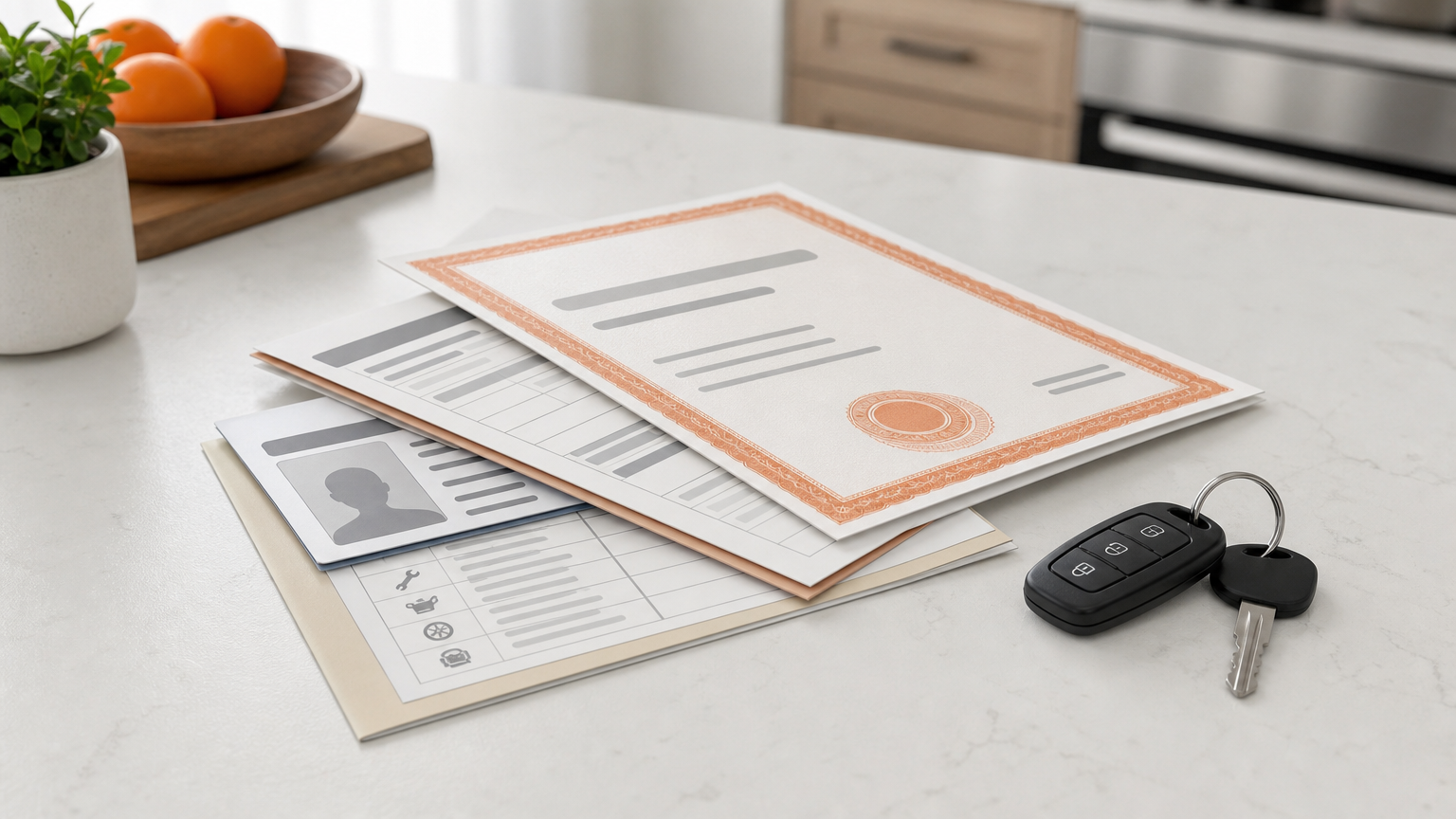
- Title, or loan payoff information if you still owe a balance
- Registration, current or recently expired
- Government-issued ID matching the name on the title
- Maintenance records, especially for major services like timing belts or transmission work
- Loan lien information from your bank or credit union, if applicable
- Spare key and any accessories included in the sale
Handle liens and loans up front
If you still owe money on the car, call your lender before the appraisal and ask for your exact payoff amount and how they handle title release, and if the title itself is missing, here’s what to do when you don’t have the title. Licensed appraisers at services like Car Trackers handle this part of the paperwork directly, contacting your lienholder and structuring the payment so your loan gets satisfied before you see your remaining balance. Knowing this number ahead of time keeps the final offer conversation simple instead of turning into a surprise deduction you weren’t expecting. Once your car is clean and your documents are within reach, you’re ready for the appraisal call itself, where the real comparison between offers starts.
Step 4. Get a video appraisal and compare offers
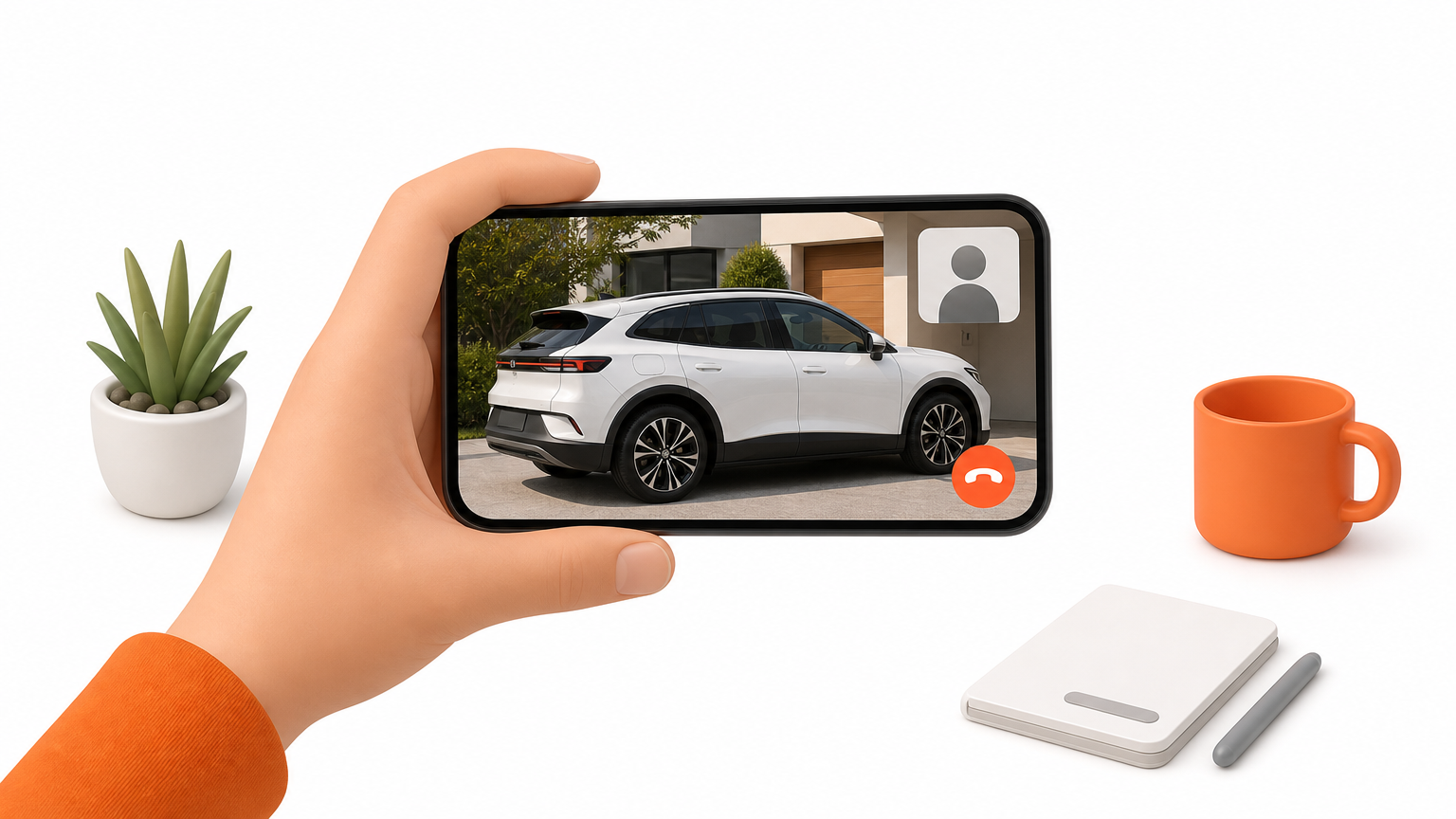
Scheduling the call is where all your prep work pays off. With your documents ready and your car cleaned up, the actual video car appraisal takes about ten minutes on your smartphone, and you’ll walk away with a real number instead of a vague estimate. This is the step where you finally find out if the market value you calculated earlier holds up against a live offer.
What happens during the call
Expect the appraiser to walk you through a short, structured process rather than a casual chat. A licensed appraiser will ask you to show the exterior panels, the tires, the dashboard, the odometer, and the engine bay on camera, checking for the same condition issues you already flagged in your own checklist. They’ll confirm your VIN, mileage, and any existing damage, then cross-reference that against current market data before giving you a number.
- Have your phone charged and in good lighting before the call starts
- Walk slowly around the exterior so the camera can pick up dents or scratches
- Show the tread depth on at least two tires
- Be upfront about warning lights or mechanical issues, since they’ll surface anyway
- Ask directly what’s included and excluded from the offer
Getting your instant offer
Once the appraiser has what they need, you get an instant offer for your car on the spot, no waiting a day for someone to "run it by the manager." At Car Trackers, this offer already accounts for the price-match guarantee, meaning if you have a competing dealer quote in hand, the team will beat it by up to $1,000. You can request your offer here before the call if you haven’t already, so you know exactly what’s coming.
The best offer is the one you can verify on the spot, not the one you have to wait a day to trust.
Comparing it against your other numbers
Line up this offer next to the range you pulled from Kelley Blue Book, Edmunds, and any dealer trade-in quote you collected earlier, and see how Car Trackers stacks up against a local dealership. If the online offer lands within or above that range, you’ve found your answer for where to sell car fast without leaving money behind. If it falls noticeably short, ask the appraiser what specifically drove the number down, since it’s often a fixable misunderstanding about condition or mileage rather than a fixed final figure.
Step 5. Finalize the deal and get paid
Accepting the offer doesn’t mean the deal is done yet, but the paperwork from here moves fast if you followed step 3. Licensed appraisers handle the paperwork to sell a car in California, including the purchase agreement and title transfer, so you’re not the one deciphering DMV forms at your kitchen table. This is the stage where a genuinely fast sale either holds up or falls apart over some overlooked detail, which is exactly why the prep work earlier in this guide matters.
Review the paperwork before you sign
Before you sign anything, confirm the numbers match what you agreed to on the appraisal call. Check that the payoff amount for any existing loan is listed correctly, that the buyer’s name and contact details on the purchase agreement match the company you actually spoke with, and that the VIN and mileage match your title. A few minutes of review here catches the rare clerical error before it becomes a payment delay.
- Confirm the sale price matches your instant offer
- Verify your loan payoff amount, if applicable
- Check that your name and address are spelled correctly
- Make sure the pickup date and location are confirmed in writing
- Ask who to contact if pickup needs to be rescheduled
Schedule pickup on your terms
Pickup gets scheduled around your availability, not the buyer’s convenience, which is a real advantage over trading in at a dealership on their lot hours. You pick the day, the time, and the location, whether that’s your driveway, your office parking lot, or somewhere else entirely. Same-day pickup at no cost is common once paperwork is signed, so there’s no reason this step should stretch into next week.
A sale isn’t finished until the money hits your account, not when you sign the paperwork.
Get paid before the car leaves
Payment happens by wire transfer at the moment of pickup, not days later once a check clears. That single detail solves the biggest complaint sellers have about private sales and slower online buyers alike. If you’re ready to finish this process, start your free appraisal with Car Trackers and you’ll have a signed agreement, a scheduled pickup, and money in your account, often within 48 hours of your first video call.
Selling your car doesn’t have to take weeks
Getting cash for your car fast isn’t about luck or timing the market right. It’s about picking the method that matches your deadline, doing a little homework on real market value, and having your paperwork ready before you ever hop on a call. Follow the five steps in this guide and you’ll skip the two weeks of showings, the lowball trade-in number, and the anxious wait for a check to clear.
Most sellers lose time not because selling a car is genuinely slow, but because they choose the wrong method for their situation. A video call appraisal and same-day wire payment solves that mismatch entirely, giving you a real number without the runaround. If you’re ready to see what your car is actually worth, learn how easy it can be to sell your car fast with Car Trackers and have cash in your account within 48 hours.
